The Vacation That Took Three Days Each Way: How America Shrank the Continent
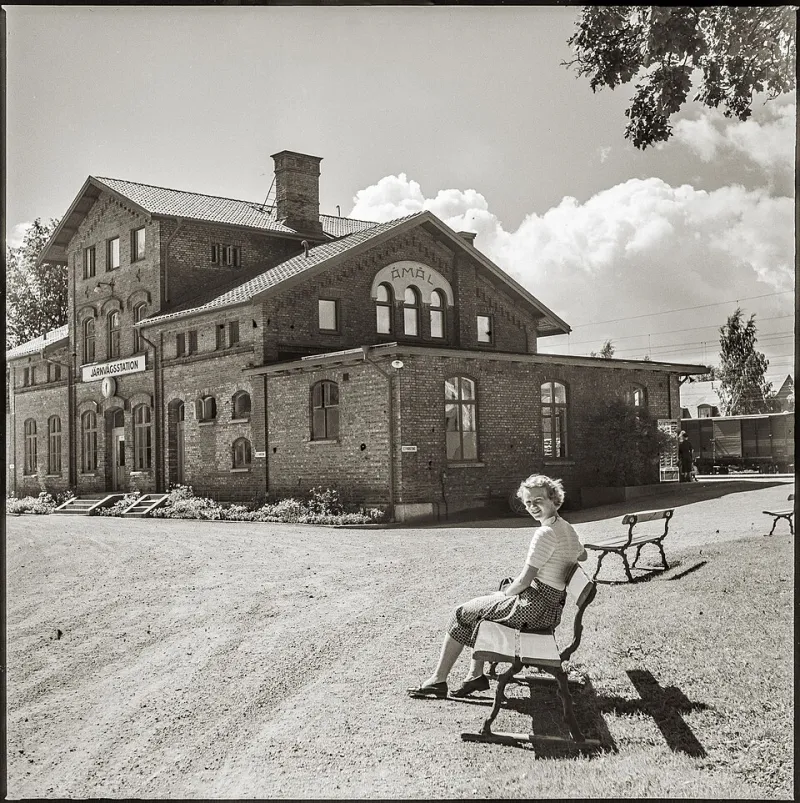
Photo: Åke Skogsjö, Public domain, via Wikimedia Commons
Picture a family of four loading a station wagon in Cleveland in 1957. They're headed to Los Angeles to see relatives, and everyone understands the deal: this isn't a vacation, it's an expedition. Roughly 2,400 miles of two-lane highway, and if everything goes right — weather, breakdowns, finding a motel with a vacancy sign lit — they'll arrive in four or five days. Then they'll do it all again to get home.
The round trip would eat up most of a month of evenings, an entire summer break, and a serious chunk of the family savings. Today, that same journey is a flight you can book from your phone at 9 p.m. and finish before lunch the next day. The continent didn't get smaller. Our experience of it did.
The Arithmetic of Distance
In 1950, the interstate highway system as we know it didn't exist. Eisenhower signed the Federal-Aid Highway Act in 1956, and before that, cross-country driving meant threading through town centers, slowing to 25 mph on Main Street in every county seat, and navigating routes that were more suggestion than system. A good day of driving covered 300 to 400 miles. A bad day — a flat tire, a detour, a rainstorm on unpaved pavement — covered far less.
Do the math and the numbers tell the story. At 45 miles per hour of honest average speed, eight hours of driving bought you about 360 miles. Los Angeles from New York was a seven-day proposition for most families. Add stops for meals and the search for lodging, and three days each way was genuinely optimistic for a trip of any real distance.
Compare that to today. Nonstop flights from JFK to LAX run about six hours in the air. Drive the interstate at a legal 70 mph and you can cover in one long day what your grandparents covered in four. The continent, measured in hours rather than miles, has shrunk by roughly 75%.
The Logistics Nobody Misses
What made those trips hard wasn't just the driving. It was everything around the driving.
Finding a bed was a nightly gamble. There was no reservation system for the average motorist. You drove until dusk, then started scanning the roadside for a 'VACANCY' sign. In peak season, families sometimes slept in the car. Motel courts charged by the person, not the room, and a clean one might run $8 a night — real money when the median family income was around $3,000 a year.
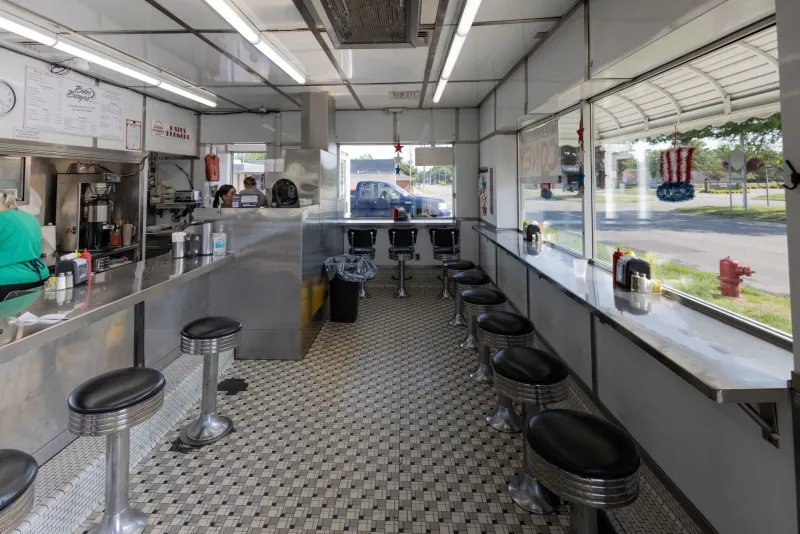
Meals were an adventure. Chain restaurants barely existed. You ate at diners, truck stops, or roadside cafes of wildly unpredictable quality. Families packed coolers and thermoses to stretch the food budget.
The car itself was barely up to the task. Air conditioning in a family car was a rolled-down window. Radiators overheated crossing the Mojave. Drivers carried tire chains, extra water, and a hope and a prayer. Breaking down meant finding a pay phone, or walking.
What the Speed Bought Us — and What It Cost
Nobody is nostalgic for a radiator boiling over outside Barstow. The speed we gained is nothing short of miraculous. A businessperson can breakfast in Boston and dine in Denver. Families scattered across the country see each other for birthdays, not just funerals. The idea of a weekend in another state would have sounded like science fiction in 1955.
But something shifted in the texture of travel. The trip used to be the vacation — roadside attractions, silly photo stops, the slow accumulation of a shared story. Now the distance is something to be endured in a metal tube, compressed and minimized. We optimized away the tedium, and a fair amount of the adventure went with it.
There's also a financial irony worth noting. In 1955, a cross-country trip was a once-a-decade event that families saved toward for years. Today, a $200 flight makes the same journey almost casual — but we take so many of them, spend so much on airport everything, that travel still consumes a meaningful share of the household budget. We made distance cheap and then bought a lot of it.
The New Normal
Consider what a child on that 1957 road trip experienced versus a child on today's flight. One spent two weeks watching the country change — the flatness of Kansas giving way to the Rockies, the language of billboards shifting state by state. The other watches a screen for six hours and wakes up somewhere else entirely.
Neither is better, exactly. But it's worth pausing on how recently 'going across the country' was a genuine undertaking, planned like a military campaign. The fact that we now treat the third-largest country on Earth as a weekend drive is one of the most remarkable changes of the last century — and one of the least examined. The continent didn't shrink. We just stopped noticing how big it used to be.