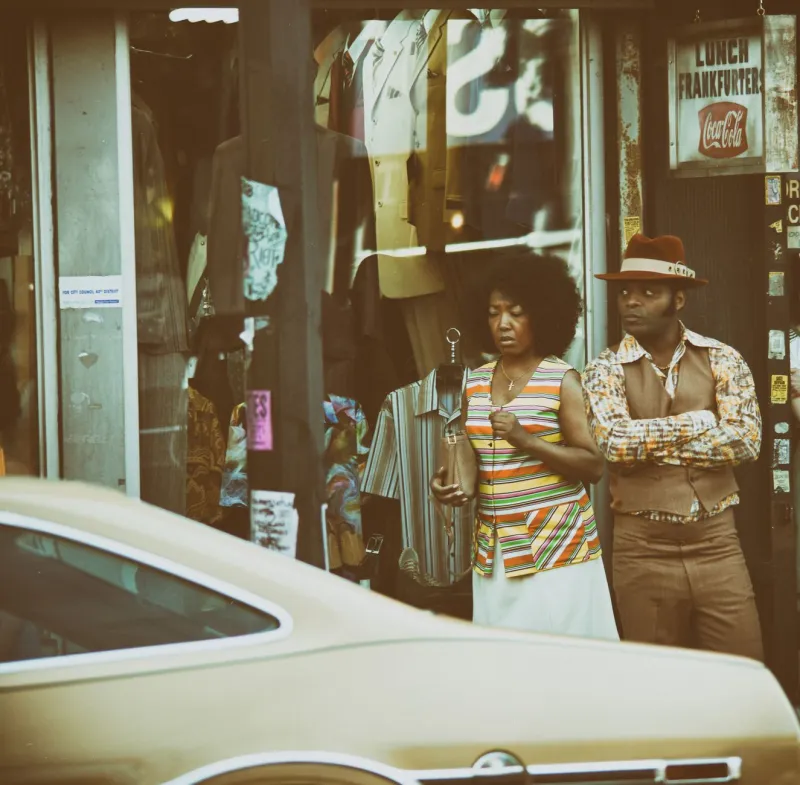
One Ticket Used to Cost You an Afternoon. Now It Can Cost You Years.
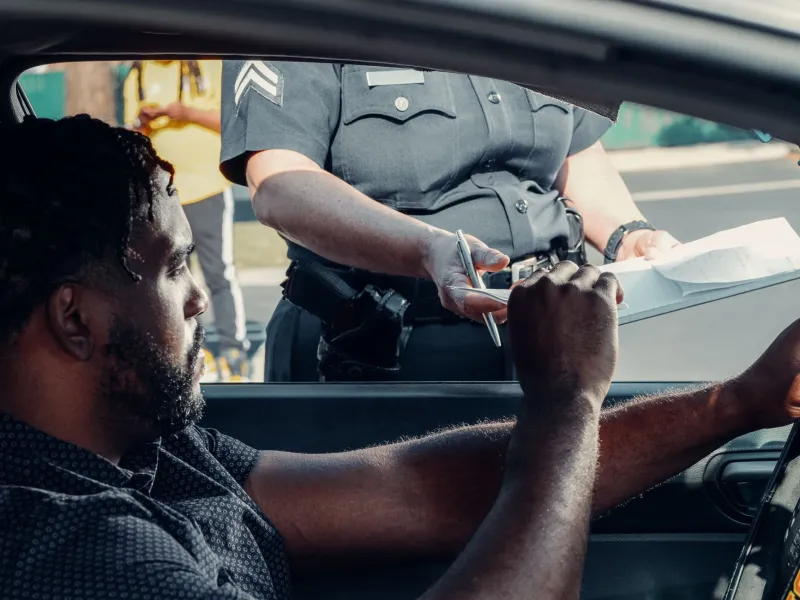
Picture this: it's 1965, somewhere in suburban Ohio. A guy named Dale gets pulled over for doing 48 in a 35. The officer writes him up, Dale drives to the county courthouse the following Tuesday, pays $15 at a wooden window, and that's the end of it. No points logged to a state database. No insurance agent automatically notified. No algorithm repricing his monthly premium. Just $15, a mildly embarrassing Tuesday, and a lesson learned.
That world is gone. And most Americans have no idea how completely it disappeared.
The Fine Was the Punishment — Full Stop
For most of the twentieth century, traffic enforcement was a genuinely local affair. Fines were set by local courts, collected by local clerks, and the money stayed in the county. The amounts were modest by design — not because officials were soft on speeders, but because the purpose was correction, not revenue. A $10 or $15 fine in the 1950s stung enough to make you slow down. It wasn't meant to restructure your finances.
More importantly, the fine was largely the end of the story. Insurance companies existed, obviously, but the information pipeline between traffic courts and insurance actuaries was slow, incomplete, and inconsistent. Many minor violations simply never made it into any record that mattered beyond the local docket. You paid, you left, and life continued more or less unchanged.
Drivers' license point systems did begin appearing in various states during the 1940s and 1950s, but their reach was limited. Without connected databases, a ticket in one state rarely followed you to another. The system had friction, and that friction — frustrating as it sometimes was — also provided a kind of accidental mercy.
When the Data Started Flowing
The shift happened gradually, then suddenly. The National Driver Register, a federal database linking state driving records, expanded significantly through the 1980s. States modernized their systems. Insurance companies, always hunting for pricing precision, began negotiating faster and more reliable access to violation data. What had once been a slow, leaky information pipeline became a high-speed connection.
By the 1990s, a traffic ticket in most states would reliably reach your insurance company's actuarial desk within weeks. The industry developed sophisticated surcharge models — formulas that translated specific violation codes into specific premium increases. A single speeding ticket, depending on your state and insurer, could raise your annual premium by 20 to 30 percent. Some studies have found that a first-offense speeding ticket adds an average of $450 per year to a driver's insurance costs, sustained for three to five years. That's potentially $1,500 to $2,250 in additional premiums — from one afternoon of going too fast on an empty highway.
The fine itself almost became the least expensive part of the experience.
Automated Enforcement and the Rise of the Ticket That Mails Itself
Then came the cameras. Red-light cameras appeared in American cities during the 1990s, and speed cameras followed in school zones and highway corridors. The pitch was always safety, and there's genuine evidence that certain camera programs reduce dangerous behavior at specific intersections. But the financial architecture built around them told a different story.
Automated enforcement removed the human moment from traffic stops — the officer who might let you off with a warning, the brief exchange that acknowledged you as a person rather than a violation code. A camera doesn't do that. It photographs, timestamps, and mails. And in many jurisdictions, the revenue from camera-issued citations flows partly to private companies contracted to operate the systems, creating a structural incentive to maximize ticket volume rather than improve safety outcomes.
Several cities — Chicago, Los Angeles, New Orleans — have faced serious scrutiny over camera programs that generated enormous fines concentrated in lower-income neighborhoods, trapping residents in debt spirals when they couldn't afford to pay. Some jurisdictions added late fees, collection charges, and even license suspensions for unpaid camera tickets, turning a $100 fine into a years-long bureaucratic ordeal.
 Photo: Los Angeles, via wallpapers.com
The Cascade Nobody Warned You About
Here's what a modern traffic ticket can actually cost you, laid out plainly:
The base fine might be $150 to $300 for a typical speeding violation. But then come the state-mandated fees — court costs, assessments, and surcharges that can double or triple the base amount before you even leave the courthouse. Points land on your license. Your insurer finds out. Your premium climbs. If you were already paying more because of your age, your ZIP code, or a previous incident, the surcharge stacks on top of existing penalties. If you miss a payment deadline or fail to appear, your license may be suspended — which in most of America means losing your ability to get to work, which creates an entirely different financial catastrophe.
For working-class Americans without savings buffers, a single ticket can genuinely destabilize a household budget. Research from the Lawyers' Committee for Civil Rights and other advocacy organizations has documented how traffic fines function as a regressive tax — hitting low-income drivers hardest while representing a minor inconvenience for wealthier ones.
Dale Would Not Recognize This System
The guy who paid $15 at a courthouse window in 1965 was operating in a world where the punishment matched the offense, information moved slowly, and the system wasn't optimized to extract maximum financial consequence from a single moment of inattention. That world had real flaws — inconsistent enforcement, racial inequities in who got stopped, genuine gaps in accountability. Nobody should romanticize it wholesale.
But the current system has its own serious problems. What was once a local, human, bounded transaction has become a data-connected, algorithmically priced, multi-year financial event. The ticket is just the trigger. The real cost unfolds afterward, quietly, in premium statements and point totals and late-fee notices that arrive long after you've forgotten the afternoon it started.
America didn't decide this consciously. It happened through decades of incremental changes — better databases, smarter insurance pricing, automated cameras, revenue-hungry municipalities — each one defensible in isolation, all of them together creating something that would have seemed almost unimaginably punitive to the driver who got pulled over on that Ohio highway in 1965.
He paid $15 and went home. That simple transaction is now a museum piece.