Before Credit Scores, Your Reputation Was the Only Number That Mattered
Every Thursday morning in mid-century America, the milkman would leave glass bottles on your porch and note what he'd delivered in a small ledger. At the end of the week, you'd settle up. Except when you couldn't. And when you couldn't, he usually kept coming anyway.
No credit check. No interest rate. No automated risk assessment. Just a man who knew your family, knew your circumstances, and made a judgment call based on something no algorithm has ever successfully quantified: character.
That system — informal, relationship-based, and grounded in genuine human knowledge — once underpinned enormous swaths of everyday American commerce. And understanding how it worked, and why it mostly worked well, reveals something uncomfortable about what we replaced it with.
The Ledger on the Counter
The corner store tab is one of the oldest credit instruments in American history, predating the country itself. Storekeepers kept handwritten accounts for regular customers — amounts owed, amounts paid, notes about circumstances. The butcher, the baker, the hardware man, the pharmacist — all of them extended informal credit to neighbors they knew personally.
This wasn't charity. It was commerce built on a realistic understanding of how household cash flow actually worked. Farm families had money after harvest and almost none before it. Factory workers were flush on payday and stretched thin by the end of the month. Seasonal workers disappeared for months and returned. Creditors understood these rhythms because they lived in the same communities, shopped at the same churches, watched the same kids grow up.
The milkman's tab, specifically, was a masterpiece of low-friction credit. Delivery happened regardless of immediate payment. Accounts were settled weekly or monthly. Families going through hard times — a layoff, a medical bill, a bad season — often found that delivery continued with a quiet understanding that things would be made right when they could be. And they usually were.
Trust as a Financial Instrument
What made this system function wasn't sentimentality. It was accountability rooted in proximity. If you stiffed the corner butcher, you still had to walk past his shop every day. Your neighbors knew him. Your kids went to school with his kids. The social cost of default was immediate and personal in a way that mailing in a minimum credit card payment to a bank in Delaware simply is not.
Reputation, in a stable community, is a remarkably effective collateral. People who intended to repay generally did, because their standing in the neighborhood depended on it. The grocer who extended you credit through a tough winter had essentially lent against your social capital — your place in the web of relationships that made daily life function.
Default rates in these informal systems, while never formally tracked in ways that made it into economic history books, appear to have been low enough that the practice persisted for generations across thousands of communities. It wasn't naive. It was a finely calibrated system that had evolved over centuries to match the actual texture of how people lived.
When the Algorithm Arrived
The formalization of consumer credit in the 20th century brought genuine benefits. The Fair Isaac Corporation introduced what became the FICO score in 1989, creating a standardized numerical measure of creditworthiness that could be applied consistently across millions of strangers. It democratized access to credit in important ways — a young person moving to a new city could establish a credit history without knowing anyone. Lenders could make decisions at scale without requiring personal relationships.
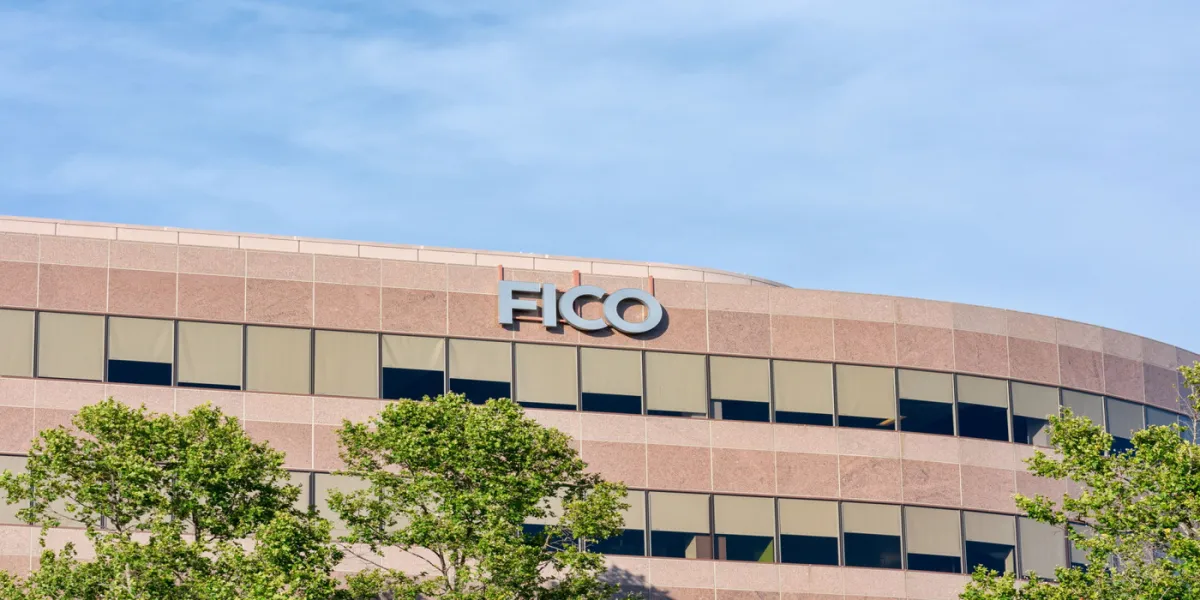 Photo: Fair Isaac Corporation, via barchart-news-media-prod.aws.barchart.com
But something significant was lost in that efficiency gain. The new system evaluated people not on who they were or what their neighbors knew about them, but on a narrow set of behaviors that a data file could capture. It was objective in the sense that it treated everyone the same. It was also blind in the sense that it couldn't see anything the numbers didn't show.
A widow whose late husband had handled all the finances suddenly had no credit history — not because she was untrustworthy, but because her name hadn't been on the accounts. A self-employed contractor with irregular but substantial income looked riskier on paper than a salaried employee earning half as much. The algorithm couldn't know what the neighborhood butcher would have known in five minutes of conversation.
The Dignity Question
There's a dimension to the old system that gets overlooked in purely economic analysis: dignity. When the milkman kept your tab going through a difficult month, the transaction remained between the two of you. There was no report filed, no record created, no permanent mark on a document that would follow you to the next landlord or employer. Hard times were understood as temporary — something that happened to good people — rather than evidence of fundamental untrustworthiness.
Modern credit reporting works differently. A missed payment from a crisis five years ago can still be costing you in interest rates today. The system has a long memory and limited mercy. The corner grocer, who watched your family recover from that bad year and saw you make good on every dollar owed, would have moved on. The credit bureau does not.
What We Could Learn From the Ledger
None of this is an argument for dismantling modern financial infrastructure. Credit scoring, for all its limitations, extended borrowing access to millions of Americans who would never have qualified under a system that required personal vouching from established community members. Women, minorities, and newcomers often fared poorly under relationship-based credit precisely because those relationships weren't equally available to everyone.
But the ledger on the corner store counter holds a lesson worth remembering: trust, when it's grounded in genuine knowledge of a person's character and circumstances, is a more sophisticated credit instrument than any algorithm built from payment histories and utilization ratios. The milkman who kept delivering through the hard months understood something about risk assessment that a three-digit number still can't fully capture.
He knew who you were. And that, it turns out, is the most important financial information there is.