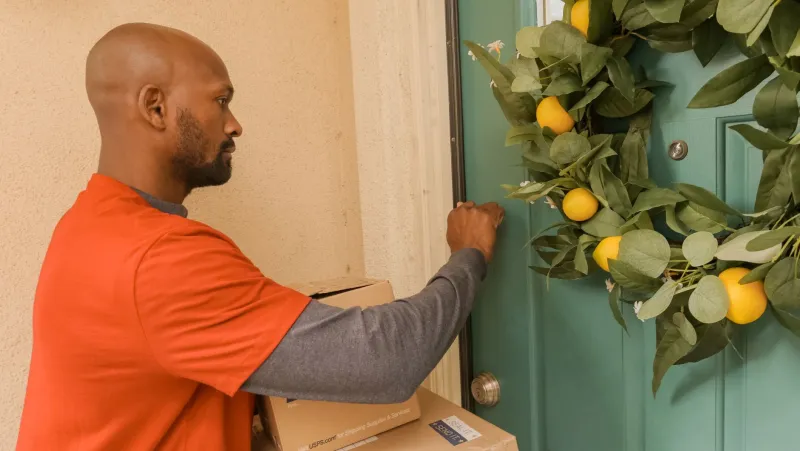
Nobody Locked the Door and Nobody Got Hurt: The Strange Story of America's Security Obsession
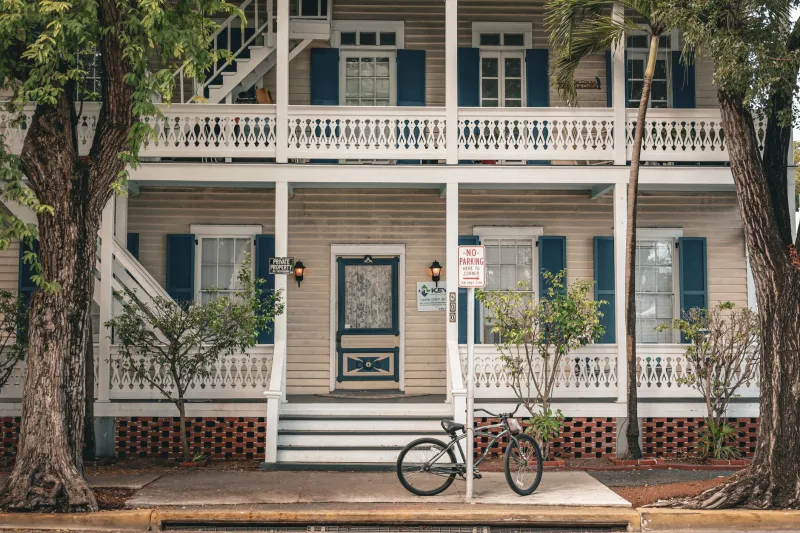
Ask anyone who grew up in suburban America before 1980 and they'll tell you the same thing: the door was never locked. Not during the day. Sometimes not at night. The neighbors walked in, the kids roamed three blocks in either direction without a second thought, and nobody's parents were checking anything because there was nothing to check.
Today, the average American home has a deadbolt, a Ring doorbell, a SimpliSafe alarm system, motion-activated floodlights, and a car in the driveway that locks automatically the moment you walk away. We've built a small surveillance infrastructure around our daily lives — and we barely noticed we were doing it.
The question worth asking is: what exactly changed?
The Unlocked America
In the 1950s and 1960s, American neighborhoods operated on a fundamentally different social contract. People knew their neighbors by name — not just the ones next door, but the ones across the street and halfway down the block. Porch culture was real. People sat outside in the evenings. They watched the street. They knew whose kid was whose, whose car was whose, and when something looked out of place.
That informal network of watchful neighbors functioned as a kind of organic security system. It wasn't organized. Nobody called it a neighborhood watch. It was simply what happened when people were genuinely embedded in their communities rather than passing through them.
Front doors went unlocked because there were eyes on the street. And because the alternative — treating your neighbors like potential threats — would have seemed almost insulting.
What the Crime Data Actually Shows
Here's where it gets genuinely complicated. The instinct is to assume that we lock our doors more because crime got worse. But the data tells a more nuanced story.
Violent crime in the United States actually peaked in the early 1990s and has declined significantly since then. The FBI's Uniform Crime Reports show that violent crime rates in 2022 were substantially lower than they were in 1991. Property crime has followed a similar downward trend over the past three decades.
So in a purely statistical sense, the America of 2024 is meaningfully safer than the America of 1993 — the era most people associate with peak urban danger. And yet spending on home security systems has exploded. The U.S. home security market is now valued at over $50 billion annually, with millions of households paying monthly monitoring fees for systems that would have seemed like science fiction to a family in 1965.
We are, in measurable terms, safer than we've been in a generation. And we are more afraid than we've ever been.
The Architecture of Fear
Several things converged to produce this paradox. Television news discovered in the 1980s and 1990s that crime coverage drove ratings. The phrase "if it bleeds, it leads" became editorial policy at local news stations across the country. Even as crime rates began their long decline after 1993, the coverage of crime remained intense — and increasingly vivid, thanks to improving video technology.
Cable news extended that dynamic around the clock. By the 2000s and 2010s, social media added a new layer: neighborhood apps like Nextdoor turned every community into a real-time crime bulletin board, where a suspicious car parked in the wrong spot could generate thirty alarmed comments before dinner.
The result was a population that felt surrounded by danger at the precise moment that danger was statistically retreating.
And the security industry was ready for that moment. Ring launched in 2013. SimpliSafe scaled aggressively through the 2010s. Amazon acquired Ring in 2018 for over a billion dollars. What had once been a niche product for the genuinely wealthy became a standard feature of middle-class homeownership.
The Financial Cost of Feeling Safe
This is where the story intersects with something real and quantifiable. Security theater — the term researchers use for safety measures that perform protection more than they provide it — costs American households real money.
A basic home security package with monthly monitoring runs anywhere from $20 to $60 per month. Add a video doorbell, smart locks, and motion sensors and you're looking at several hundred dollars in hardware. Over a decade, a moderately equipped household might spend $5,000 to $8,000 on security infrastructure that previous generations never needed and never missed.
That's money that isn't going into retirement accounts, college savings, or emergency funds. It's the price of a particular kind of anxiety — an anxiety that the industry has every incentive to cultivate and very little incentive to relieve.
What We Lost When We Locked the Door
There's a less tangible cost too. The unlocked door wasn't just a security posture. It was a statement about how you related to the people around you. It said: I trust you. You're welcome here. We're in this together.
When we closed and bolted that door — literally and figuratively — we changed something about the social fabric of American neighborhoods. Studies on social isolation consistently show that Americans report fewer close friends and less connection to their immediate communities than they did in previous decades. The causes are multiple and complex, but the physical design of our daily lives plays a role. We drive into garages. We don't sit on porches. We don't know the neighbor's name.
And we watch the street through a camera rather than from a chair.
The Remarkable Shift
The America that left its front door unlocked wasn't naive. It was embedded. People knew their neighbors because they saw them constantly, borrowed things from them, argued with them, helped them. That proximity created a kind of safety that no alarm system can replicate.
We haven't just changed our locks. We've changed our relationship to community itself — and paid handsomely for the privilege of feeling less safe in a safer world.