Before Amazon Prime, a Small Army of Men in White Uniforms Delivered Everything You Needed
Somewhere in the back of a family photo album, there's probably a picture of a milkman. He's standing at the front door, bottles in hand, in a white uniform and a cap, grinning at whoever answered. It looks quaint now — a relic from a slower world.
But look closer at what that image actually represents. That milkman came to your door every morning. He knew your family's order by heart. He noticed when you left a note asking for extra cream. He noticed, too, when the bottles from yesterday hadn't been taken in — and sometimes, that meant something was wrong.
That wasn't just a delivery service. That was infrastructure.
The Doorstep Economy Nobody Talks About
By the mid-twentieth century, the average American household was served by a surprisingly sophisticated web of regular home deliveries. The milkman was just the most iconic. There was also the bread man, who arrived two or three times a week with fresh loaves, rolls, and sometimes pastries. The iceman — still a fixture in homes without electric refrigerators well into the 1940s — hauled heavy blocks up back stairs without complaint. In many cities, a laundry service picked up and returned clothes on a weekly schedule. Some neighborhoods had a rolling grocery cart or a dry goods wagon. In rural areas, a traveling salesman from companies like Watkins or Fuller Brush showed up seasonally with household supplies.
This wasn't a luxury system. It was a working-class system. These deliveries were priced for ordinary families, structured around the rhythms of household budgets, and often offered informal credit for customers who'd been on the route for years. The relationship between deliveryman and household was a genuine commercial bond — built on familiarity, reliability, and mutual dependence.
The economics made sense because the infrastructure was local. Routes were short. Drivers knew their customers. Waste was minimal because orders were customized and consistent.
What the Supermarket Actually Replaced
The postwar supermarket boom of the 1950s and 1960s changed everything, and not entirely in the ways we remember. The standard story is one of pure progress: more choices, lower prices, greater convenience. And there's truth in that. A well-stocked supermarket offered variety that no milk route could match.
But the supermarket also transferred a significant burden back to the consumer. You now had to drive to the store. You had to navigate aisles, make decisions, carry bags, find parking. The time cost was real. For households with one car — or none — the calculus was complicated. And the personal relationship that made the old delivery system feel like something more than commerce simply evaporated.
Home delivery didn't die immediately. Milkmen were still common in many parts of the country into the 1970s. Some bread routes survived into the 1980s. But the economics gradually turned against them as supermarket prices fell and car ownership rose. One by one, the routes disappeared.
The Subscription Model We Think We Invented
Here's the part that should give modern consumers pause: we spent fifty years dismantling the original doorstep economy, and then spent the last decade frantically trying to rebuild it.
Meal kit services. Grocery delivery apps. Subscription boxes for coffee, wine, pet food, toiletries, and razors. Amazon's Subscribe & Save. Instacart. DoorDash. The entire premise — regular, automatic delivery of things you need — is not new. It's a very old idea dressed in a smartphone interface.
And in some ways, the modern version is genuinely better. The range of products is staggering. Delivery windows are precise. You can pause, cancel, or modify with a tap.
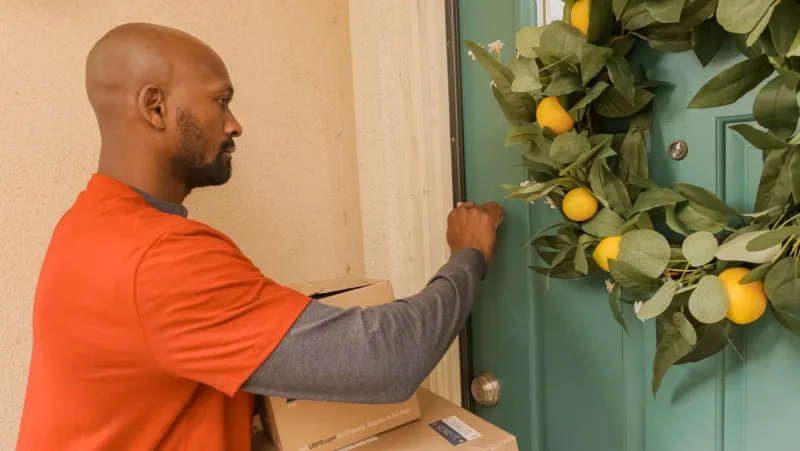
But something is different, and it's worth naming. The milkman knew your family. He knew you had a new baby and started leaving an extra quart without being asked. He knew the elderly widow at the end of the block lived alone and would wave from the window every Tuesday. That kind of embedded social awareness isn't something an algorithm replicates. The modern delivery driver who leaves a box on your porch and photographs it for the app isn't part of your neighborhood's connective tissue. He's part of a logistics network. That's not a criticism — it's just a different thing entirely.
What Got Quietly Lost
The original doorstep economy was, in a real sense, a community institution. It employed local workers on local routes. It kept money circulating within neighborhoods. It created daily human touchpoints that, in aggregate, made streets feel inhabited and watched over.
When the supermarket replaced the bread man and the milkman, it wasn't just a change in shopping habits. It was a reorganization of how neighborhoods worked — who you saw regularly, who knew your name, who noticed if something seemed off.
We got lower prices and more choices. We gave up something less easy to put a number on.
The next time a subscription box arrives on your porch, it's worth pausing for a moment. The concept is ancient. The convenience is real. But the man in the white uniform who knew how you took your milk — that part isn't coming back.