When a Haircut Cost Less Than a Cup of Coffee: The Rise and Fall of America's Corner Barbershop
When a Haircut Cost Less Than a Cup of Coffee: The Rise and Fall of America's Corner Barbershop
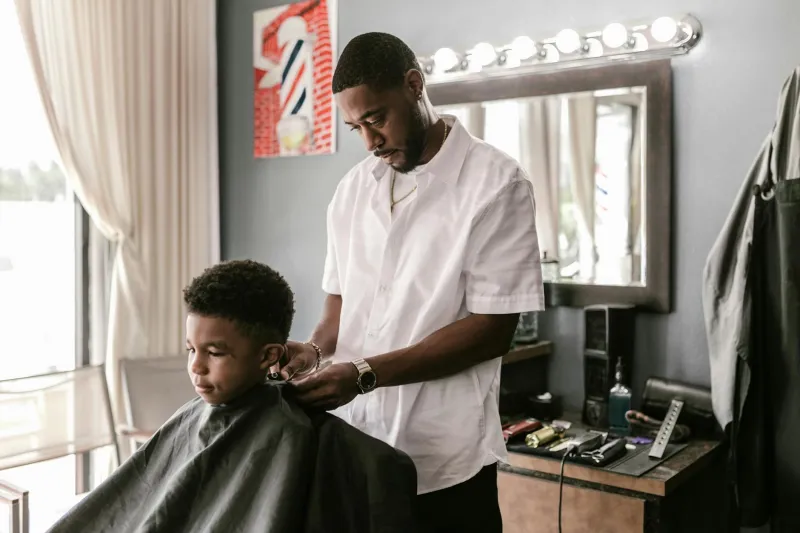
Walk past any modern "barbershop" today and you'll likely see floor-to-ceiling windows, exposed brick walls, craft beer on tap, and price lists that would make your grandfather's barber faint. What was once America's most affordable grooming ritual — a quick trim for pocket change — has transformed into a luxury experience that costs more than many families once spent on an entire week of groceries.
The Golden Age of the Two-Dollar Trim
In 1970, the average haircut cost $2.50. Adjusted for inflation, that's about $19 today. But walk into most barbershops now, and you'll pay anywhere from $35 to $75 for what used to be a 15-minute affair. Some upscale establishments charge over $100 for the same basic service that once cost less than a movie ticket.
Back then, every neighborhood had its corner barbershop. These weren't businesses trying to be anything other than what they were: places where working men got practical haircuts from barbers who'd learned their trade through apprenticeships, not YouTube tutorials. The red, white, and blue pole outside wasn't a vintage design statement — it was just the standard sign for a standard service.
Joe Martinez ran such a shop in Detroit for 47 years. "I charged what people could afford," he remembers. "Construction workers, factory guys, teachers — they all paid the same price. Nobody thought twice about getting their hair cut every two weeks because it didn't break the bank."
When Conversation Was Free and Hair Cuts Were Cheap
The old barbershop served a social function that went far beyond grooming. Men gathered there not just for haircuts, but for news, gossip, and genuine human connection. The barber knew your family, your job troubles, and how you liked your sideburns trimmed. This community hub operated on thin margins but steady volume — dozens of customers per day, each paying a few dollars.
Contrast this with today's appointment-based model. Modern barbershops often book clients weeks in advance, limiting themselves to perhaps a dozen customers daily. To maintain profitability with lower volume, prices had to increase dramatically. What was once an impulse purchase — "I'll stop by Tony's for a quick trim" — became a planned expense requiring budgeting.
The Economics of Transformation
Several forces conspired to price working-class Americans out of regular barbershop visits. Rising commercial rents pushed many traditional shops out of affordable neighborhoods. As older barbers retired, fewer young people entered the trade, creating scarcity that drove up wages and, consequently, prices.
Meanwhile, a new generation of entrepreneurs recognized an opportunity. They rebranded the humble barbershop as a "grooming experience," adding services like beard oils, hot towel treatments, and even cocktails. These additions justified premium pricing but fundamentally changed who could afford regular visits.
"We're not just cutting hair," explains Marcus Thompson, owner of three upscale barbershops in Austin. "We're providing an experience, a lifestyle. Our clients understand they're paying for quality time, not just a quick trim."
The Hidden Cost of Luxury Grooming
This transformation reflects a broader economic trend: the disappearance of affordable, middle-market services. Just as airlines eliminated coach comfort to create premium experiences, barbershops abandoned the working-class customer base that once sustained them.
The numbers tell the story. In 1980, the average American man spent about $50 per year on haircuts (in today's dollars). Now, regular barbershop visits can easily cost $400-600 annually. For families already stretched by rising housing, healthcare, and education costs, professional grooming became a luxury rather than basic maintenance.
Many men adapted by extending time between cuts, learning to trim their own hair, or visiting chain salons where speed and efficiency replaced the personal touch of neighborhood barbers. The social aspect — that informal community gathering space — largely disappeared.
What We Lost in Translation
The economic transformation of barbershops represents more than just inflation or market forces. It symbolizes how American commerce shifted from serving broad communities to targeting narrow demographics willing to pay premium prices.
Traditional barbers provided a reliable, affordable service that working people could count on. Today's grooming establishments offer experiences tailored to customers who view haircuts as lifestyle statements rather than practical necessities. Both models work economically, but they serve entirely different populations.
The Surprising Return
Interestingly, some entrepreneurs are rediscovering the old model's wisdom. A handful of new barbershops are opening with deliberately simple offerings: good cuts, fair prices, no frills. These throwback shops often struggle to find suitable real estate and compete with established luxury competitors, but they're finding customers hungry for the straightforward service their grandfathers took for granted.
The corner barbershop's transformation from neighborhood necessity to luxury destination perfectly illustrates how economic forces can fundamentally alter cultural institutions. What began as America's most democratic grooming space — where factory workers sat next to bank managers — became a marker of economic privilege.
Today, a simple haircut costs more than many Americans once spent on entertainment for an entire month. Whether that represents progress or loss depends largely on which side of the price increase you find yourself.