The Year America Stopped Counting: How Balanced Budgets Went From National Pride to Political Punchline
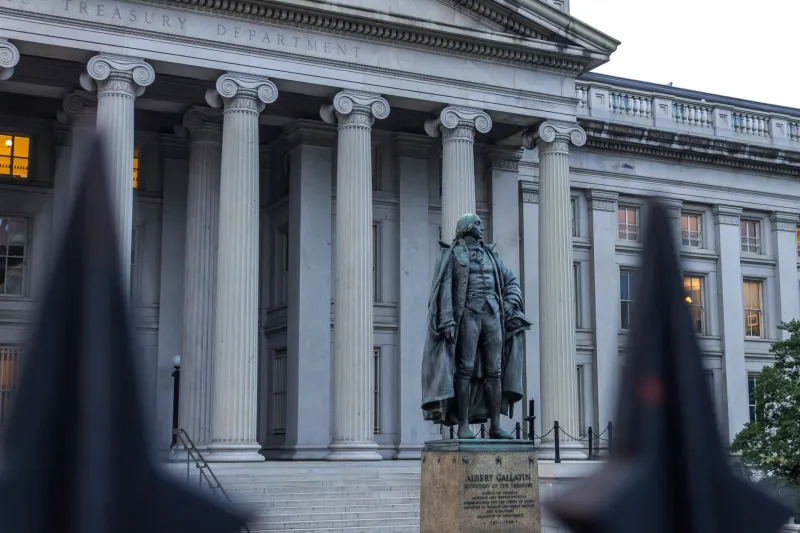
In 1956, a first-class stamp cost three cents. A new house ran about $11,700. And the federal government, under President Dwight Eisenhower, finished the year with a budget surplus — meaning it collected more than it spent, paid down a little debt, and moved on.
Nobody threw a parade. That was just how things were supposed to work.
Fast forward to today, and the federal government is running annual deficits measured in the trillions. The national debt has crossed $34 trillion. Interest payments alone now consume more of the federal budget than defense spending. And in Washington, the idea of a balanced budget has become less a serious policy goal than a talking point dusted off every election cycle and quietly shelved shortly after.
Something changed. Not just the numbers — the entire mindset.
When Debt Was Something to Be Ashamed Of
For much of American history, deficit spending was treated the way personal bankruptcy was treated at the kitchen table: as a failure. Something went wrong. Fix it. Don't let it happen again.
The country had borrowed heavily to fight wars — the Civil War, both World Wars — but the expectation was always that the debt would be paid back in peacetime. And often it was. The United States ran budget surpluses in 1947, 1948, 1949, 1951, and through most of the Eisenhower years. Politicians on both sides of the aisle competed to demonstrate fiscal seriousness. A congressman who presided over a bloated budget faced real political consequences.
This wasn't just ideology. It reflected a cultural assumption that government, like a household, should spend within its means. The analogy was imperfect — economists have long argued that federal finance works differently than a family checkbook — but it shaped behavior in ways that kept spending broadly tethered to revenue.
Even Franklin Roosevelt, who dramatically expanded government during the New Deal, felt political pressure to pull back spending in 1937 — a decision that briefly tipped the economy back into recession. The instinct to balance the books was that powerful.
The Turning Points Nobody Voted On
The shift didn't happen overnight. It unfolded across several decades, each era adding a new layer of justification for spending more than the country took in.
The 1960s brought the simultaneous costs of the Vietnam War and the Great Society's domestic programs — guns and butter, as the era's economists put it. Lyndon Johnson resisted tax increases to pay for both, and the deficit grew. It was manageable, but the precedent was set: you could fund major initiatives without fully paying for them.
The 1980s were the real watershed. The Reagan tax cuts of 1981 slashed federal revenue while defense spending surged. The deficit tripled. But rather than triggering the expected political backlash, something different happened: a new economic theory — supply-side economics — provided intellectual cover for the idea that deficits didn't really matter, or that growth would eventually close the gap. It mostly didn't.
By the time Bill Clinton actually balanced the budget in the late 1990s — the last time that happened — it felt like an anomaly rather than a restoration of the old order. The surplus lasted four years. Then came the 2001 tax cuts, the post-9/11 military buildup, and the 2008 financial crisis, each adding zeros to the national ledger.
The COVID-19 pandemic spending of 2020 and 2021 added roughly $5 trillion in a matter of months. By that point, the concept of restraint had become almost theoretical.
What We Told Ourselves Along the Way
Every era found its own rationale. The deficits were temporary. The economy would grow its way out. Interest rates were low so the borrowing was cheap. The alternative — cutting programs or raising taxes — was politically impossible. Each argument had some merit. Taken together, they built a permission structure for permanent deficit spending that no single generation consciously chose.
The result is a federal budget where mandatory spending — Social Security, Medicare, Medicaid, and interest on the debt — consumes nearly every dollar collected in taxes before Congress writes a single discretionary check. The room for genuine fiscal maneuvering has shrunk to a sliver.
And yet the political conversation rarely reflects this reality with full honesty. Candidates still promise tax cuts. They still promise new programs. The math is rarely shown.
The Cost of Forgetting
What gets lost in the abstraction of trillion-dollar numbers is the genuine trade-off that earlier generations understood intuitively: money borrowed today is a claim on someone else's future earnings. The three-cent stamp era wasn't just cheaper — it represented a government that was, at least sometimes, genuinely living within collective means.
That doesn't mean every deficit was wrong or that austerity is always wise. But there's a difference between borrowing strategically and simply stopping to count. America, somewhere along the way, stopped counting.
The remarkable thing isn't that the numbers got big. It's how completely normal that came to feel.