When Getting to Work Cost Less Than Your Morning Coffee: America's Lost Transit Revolution
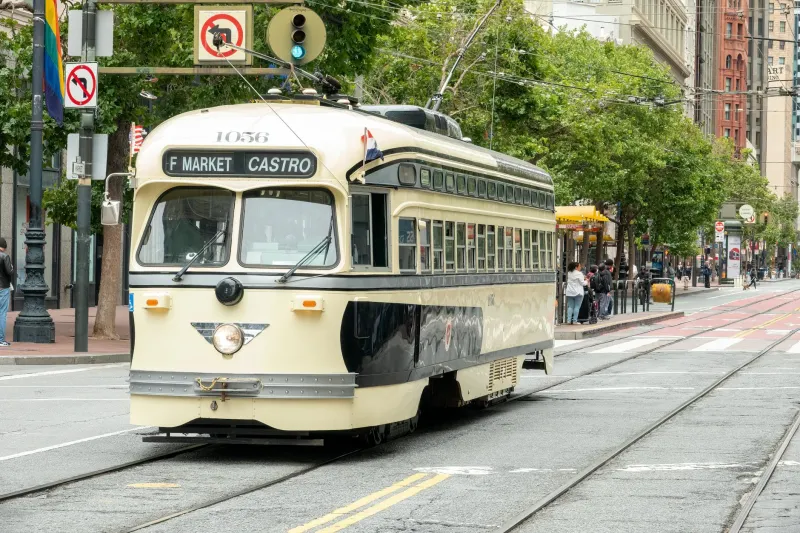
The Nickel Ride That Built Cities
In 1920, you could travel from downtown Detroit to the furthest suburb for a nickel—about 75 cents in today's money. That same trip today, by the limited bus service that replaced the streetcars, costs $2.50 and takes twice as long. But the real difference isn't in the fare—it's in the fact that most people no longer have that option at all.
American cities once pulsed with the rhythm of streetcars, interurbans, and comprehensive bus networks that made car ownership genuinely optional for working families. These weren't just transportation systems—they were the circulatory system of urban America, moving people efficiently and affordably in ways that shaped where families lived, how much they spent, and what kinds of opportunities they could access.
The Infrastructure That Paid for Itself
By 1920, American cities boasted over 40,000 miles of streetcar track—more than the entire Interstate Highway System that would replace it. Los Angeles alone had 1,100 miles of electric railway, connecting beach communities to downtown in a web so comprehensive that car ownership was more luxury than necessity.
 Photo: Interstate Highway System, via i.etsystatic.com
 Photo: Los Angeles, via eskipaper.com
These systems weren't subsidized government programs—they were profitable private enterprises that paid property taxes and employed hundreds of thousands of Americans. The economics worked because the volume was there: entire neighborhoods were built around streetcar stops, and businesses clustered along the lines because that's where customers could easily reach them.
A typical working family in 1925 might spend $15 a month on transit passes—about $200 in today's money—to provide unlimited mobility for every family member. Compare that to the $500-800 monthly car payment, insurance, and gas costs that define modern transportation budgets.
The Daily Economics of Mobility
When transit was comprehensive and cheap, it changed how families made economic decisions. A factory worker in Cleveland could live in a pleasant streetcar suburb and commute downtown for less than modern Americans spend on a single tank of gas. Women could work downtown department stores without needing to negotiate car access with their husbands. Teenagers could reach jobs across the city without requiring family transportation coordination.
This mobility was democratic in ways we've forgotten. The same streetcar carried factory workers, shop clerks, and business executives. The same fare structure applied to everyone. A family's economic mobility wasn't constrained by their ability to afford, maintain, and insure multiple automobiles.
Consider the household budget implications: In 1930, the average American family spent about 5% of their income on transportation. Today, that figure hovers around 15-20%, making transportation the second-largest household expense after housing for most families.
The Unraveling of a System
The decline of American transit wasn't natural market evolution—it was systematic destruction. Between 1936 and 1950, a consortium of General Motors, Firestone Tires, and Standard Oil bought up streetcar systems in over 40 cities, dismantled the tracks, and replaced the service with buses that were slower, less comfortable, and less reliable.
This wasn't conspiracy theory—it was documented business strategy that resulted in criminal convictions for conspiracy to monopolize transportation. But the damage was done. Cities that had spent decades building integrated transit networks saw them disappear within a few years.
Federal policy accelerated the destruction. The Interstate Highway Act of 1956 invested $25 billion in highways while transit systems received virtually nothing. Urban renewal programs bulldozed dense, transit-oriented neighborhoods to make room for parking lots and suburban-style development.
The Hidden Costs of Car Dependency
When Americans lost their transit systems, they didn't just lose a transportation option—they lost economic flexibility. Suddenly, every working adult needed access to a car, which meant every household needed multiple cars, which meant massive increases in transportation costs that rippled through family budgets.
The American Automobile Association estimates that owning a car costs about $10,000 annually when you factor in payments, insurance, maintenance, and fuel. For a two-adult household, that's $20,000 a year just to maintain basic mobility—money that could otherwise go toward housing, education, or savings.
This car dependency also created geographic inequality. Families who couldn't afford reliable cars found themselves cut off from job opportunities, shopping, and services. The phrase "transportation poverty" entered the vocabulary to describe Americans who spend more than 30% of their income just getting around.
What Comprehensive Transit Actually Looked Like
Cities with robust streetcar networks operated on completely different principles than today's transit systems. Service ran every few minutes during peak hours, with late-night and weekend service that treated transit as a utility rather than a social service. Routes were designed for speed and convenience, often running in dedicated lanes or on private rights-of-way.
The streetcars themselves were comfortable and dignified—upholstered seats, large windows, smooth rides on steel rails. Many featured separate compartments for different classes of service, recognizing that transit needed to attract middle-class riders to remain financially viable.
Most importantly, the systems were comprehensive. In Los Angeles, you could reach Pasadena, Long Beach, San Bernardino, and dozens of other communities using a single transit network. The idea that you might need a car to reach parts of your own metropolitan area was simply foreign.
The Modern Transit Paradox
Today's American transit systems operate under completely different assumptions than their predecessors. Modern buses and trains are heavily subsidized, slower than the systems they replaced, and designed primarily to serve low-income riders rather than provide comprehensive mobility for all economic classes.
A monthly transit pass in most American cities costs $75-150, but provides access to systems that cover only a fraction of the metropolitan area and operate with limited frequency and hours. The economics don't work for most middle-class families, creating a vicious cycle where reduced ridership leads to reduced service.
Meanwhile, cities that maintained or rebuilt comprehensive transit—like New York, San Francisco, and Washington DC—demonstrate what's possible. In these places, car ownership remains optional for many residents, transportation costs consume smaller portions of household budgets, and economic mobility isn't constrained by automobile access.
The Price of Mobility
The numbers tell the story starkly: In 1930, a working-class family in Detroit could access the entire metropolitan area for about $200 a month in today's money. Today, that same mobility requires owning and maintaining a car that costs $800+ monthly, plus insurance, plus fuel, plus parking.
This isn't just about transportation—it's about economic opportunity. When getting to work costs less than your morning coffee, as it did in the streetcar era, families have more resources available for everything else. When transportation becomes a major household expense, it constrains choices about housing, education, and savings.
The streetcar suburbs that once defined American urban development—walkable neighborhoods connected by fast, frequent transit—now command premium prices precisely because they offer an alternative to car dependency. What was once the standard development pattern has become a luxury amenity.
The Infrastructure We Abandoned
Looking at old maps of American streetcar networks feels like viewing a parallel universe where different choices led to different outcomes. The infrastructure was there. The ridership was there. The economic model worked.
What we lost wasn't just transportation—it was a different relationship between cities and suburbs, between mobility and cost, between public infrastructure and private opportunity. The dime that once carried you across town represented more than cheap transit—it represented a society that treated mobility as a public good rather than a private responsibility.
In an era when transportation costs strain household budgets and traffic congestion chokes urban productivity, the ghost of America's streetcar network offers a reminder of what comprehensive, affordable mobility once looked like—and what it might look like again.