America's First Search Engine Weighed Twenty Pounds and Lived in Your Kitchen
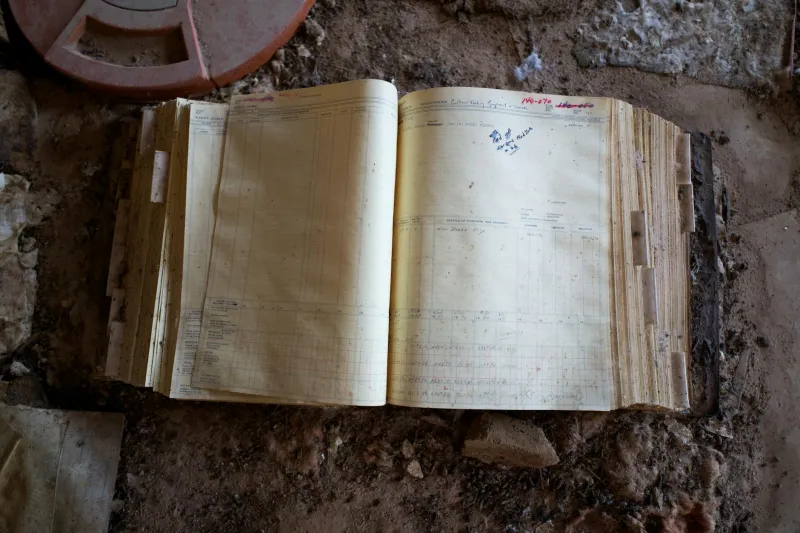
The Ritual of the Yellow Pages
Every September, like clockwork, it appeared on doorsteps across America: a thick, yellow tome that contained the economic lifeblood of your entire community. The phone book wasn't just a directory—it was your portal to local commerce, your research tool, and your backup plan when you needed anything from a plumber to a pizza.
 Photo: Yellow Pages, via www.amrita.ro
Opening those pages meant entering a deliberate world where finding information required strategy, patience, and sometimes a little luck. You couldn't just type "best Italian restaurant near me." You had to know that restaurants lived under "R," or maybe "I" for Italian, or perhaps you'd start with "P" for pizza and work your way through the categories.
This wasn't inefficiency—it was a completely different relationship with information and decision-making.
The Economics of Alphabetical Order
Businesses understood the power of phone book placement in ways that would make modern SEO experts weep. Companies named their businesses strategically: "A-1 Plumbing," "AAA Auto Repair," "Aardvark Exterminators." Being first in the alphabet wasn't just helpful—it was a competitive advantage worth thousands of dollars.
The Yellow Pages created a local economy where size of advertisement directly correlated with perceived trustworthiness. A full-page ad suggested success and permanence. A simple line listing meant you were either new, small, or confident enough in your reputation that you didn't need to shout.
Consumers learned to read these signals. The plumber with the biggest ad might be the most expensive, but he was probably also the most established. The restaurant that splurged on a quarter-page spread was making a statement about their commitment to the community.
The Art of the Patient Search
Finding what you needed required genuine skill. You learned to think like the business owner: Would a carpet cleaner list under "C" for carpet, "R" for rug, or "F" for floor care? Smart searchers developed strategies—start broad, then narrow down, and always check multiple categories.
This process had unexpected benefits. While looking for a locksmith, you might discover a security company you didn't know existed. Searching for a restaurant could lead you to a catering service for your upcoming party. The phone book rewarded browsers and punished the impatient.
Families developed phone book expertise. Kids learned to navigate the white pages to find friends' phone numbers. Parents became skilled at decoding business categories. Grandparents kept old phone books as backup references, understanding that some information was too valuable to throw away.
The Discovery Economy
What we lost when phone books disappeared wasn't just a reference tool—it was serendipity. Today's search algorithms show you exactly what you're looking for, but the Yellow Pages showed you what you didn't know you needed.
Browsing through "Home Improvement" might lead you to discover that upholstery repair was a thing, or that someone in your town specialized in antique restoration. The physical act of flipping pages created accidental encounters with businesses and services that pure digital searches rarely provide.
This discovery mechanism supported local entrepreneurship in ways we're only now beginning to understand. Small businesses with unique specialties could be found by curious browsers who weren't specifically searching for them. The phone book was democratic—every business got at least one line, and creativity in your ad could level the playing field against bigger competitors.
The Social Infrastructure of Information
Phone books created shared knowledge systems within communities. Everyone had the same information, accessed the same way. When someone recommended "that great Chinese place on Main Street," you could look it up in the same book they used. There was common ground in how people found and shared business information.
 Photo: Main Street, via i.pinimg.com
Families kept phone books in specific places—usually the kitchen, sometimes by the main phone. These became reference stations for household decision-making. Planning a dinner out meant gathering around the Yellow Pages, comparing options, and making decisions as a group.
The phone book also served as a community archive. Old editions became historical documents, preserving records of businesses that had closed, neighborhoods that had changed, and economic shifts that had reshaped local commerce.
The Economics of Patience
Using a phone book required an investment of time that fundamentally changed how people made purchasing decisions. You couldn't quickly comparison shop, so you learned to ask different questions: Which business had been around longest? Who had invested in a professional-looking ad? Who was located closest to you?
This slower pace of research led to different spending patterns. People did more homework before making calls. They asked more questions when they finally reached a business. The friction of finding information made the eventual transaction more valuable to both buyer and seller.
Contrast this with today's instant access to reviews, prices, and alternatives. Modern consumers can research exhaustively in minutes, but they also change their minds just as quickly. The phone book era created more committed customers because the search process itself required commitment.
The Death of the Doorstep Database
By the early 2000s, phone books were already becoming obsolete, but their disappearance accelerated rapidly. Internet search made them seem quaint, then irrelevant, then wasteful. The last major phone book delivery in many cities happened around 2010, marking the end of an information era that had lasted nearly a century.
What replaced them wasn't just more efficient—it was fundamentally different. Google doesn't reward alphabetical creativity or local advertising investment in the same way. Online reviews matter more than ad size. Location-based search has made proximity less important than reputation.
The businesses that thrived in the phone book era—those that understood how to present themselves in print, how to choose the right categories, how to craft compelling one-line descriptions—had to completely reimagine their marketing strategies.
The Lost Art of Local Discovery
Today's search algorithms are incredibly sophisticated, but they're also incredibly narrow. They show you exactly what you're looking for, ranked by relevance and popularity. The phone book showed you everything available, ranked by nothing more than alphabet and advertising budget.
This difference matters more than we realize. The serendipitous discovery of local businesses, the democratic access to community commerce, the shared reference point for neighborhood recommendations—these weren't just features of phone books, they were features of how communities functioned economically.
When we gained the ability to find anything instantly, we lost the habit of discovering everything gradually. The phone book taught patience, rewarded exploration, and created accidental connections between consumers and local businesses that today's targeted advertising can't replicate.
In an age of infinite information, there was something valuable about a twenty-pound book that contained just enough.