When Your Local Banker Knew Your Father's Name: How America's Small Business Dreams Got Lost in the Algorithm
Walk into any bank today with a business idea, and you'll likely be handed a tablet to fill out an online application. The person behind the counter probably started working there last month and has never approved a loan in their life. Your credit score will be pulled, your debt-to-income ratio calculated, and your entrepreneurial dreams fed into an algorithm that spits out a yes or no based on data points that never capture the fire in your belly or the solid reputation you've built in your community.
It wasn't always this way.
When Banking Was Personal
In 1960s America, starting a small business often began with a Saturday morning visit to the local bank. The bank president knew your family, remembered when your father started his auto repair shop, and had watched you grow up in the neighborhood. When you walked in with an idea for a hardware store or a small restaurant, the conversation wasn't about your FICO score – it was about your character.
"I'd like to open a bakery," you might have said, and the banker would lean back in his chair, already running through what he knew about you. Did you show up to work on time? Did you pay your bills? Were you the type of person who followed through on commitments? These weren't questions answered by a computer – they were answered by living in the same community for decades.
The paperwork was minimal. A simple loan application, maybe a basic business plan sketched out on a few pages, and often just your word that you'd make it work. Interest rates were reasonable, terms were flexible, and if you hit a rough patch, you could walk back into that same office and work something out face-to-face.
The Human Algorithm
What made this system work wasn't just nostalgia or small-town charm – it was information. The local banker possessed something no algorithm can replicate: deep, contextual knowledge about the borrower and the community they served.
When Frank Thompson wanted to open Thompson's Five and Dime in 1965, his banker knew that Frank had managed the inventory at Miller's General Store for fifteen years without a single discrepancy. He knew Frank's wife was the church treasurer and had never made a mistake with the books. He knew the downtown area needed exactly the kind of store Frank wanted to open, and he knew Frank was the kind of person who would sweep the sidewalk in front of his shop every morning whether business was good or bad.
 Photo: Thompson's Five and Dime, via kuehlhorn.com
That knowledge was worth more than any credit report.
The Rise of Risk Management
Something fundamental shifted in American banking during the 1980s and 1990s. Local banks were bought by regional chains, which were then swallowed by national corporations. The banker who knew your family was replaced by loan officers who followed standardized procedures written in distant corporate offices.
The change wasn't entirely negative. The old system had its problems – it could be exclusionary, sometimes favoring established families over newcomers or minorities. Standardized lending practices helped level the playing field in important ways.
But something crucial was lost in translation. The art of assessing character, understanding local market conditions, and making judgment calls based on human insight gave way to the science of credit scoring, automated underwriting, and risk management protocols.
Today's Entrepreneurial Obstacle Course
Modern small business financing has become a marathon of documentation. Entrepreneurs spend months assembling business plans, financial projections, tax returns, bank statements, and legal documents. They navigate SBA requirements, collateral demands, and personal guarantees that can put their homes at risk.
The average time to get a small business loan approval has stretched from days to months. Many applications are rejected by algorithms before a human ever sees them. The reasons for rejection are often opaque – "insufficient credit history" or "debt-to-income ratio exceeds parameters" – leaving would-be business owners with no clear path to improvement.
Young entrepreneurs face particular challenges. Without established credit histories or significant collateral, they're often shut out entirely from traditional lending, forced toward high-interest alternative lenders or complex investor relationships that would have been unnecessary when character counted for more than credit scores.
What We Lost in the Translation
The shift from relationship-based to data-driven lending wasn't just about changing processes – it fundamentally altered the American entrepreneurial landscape. Small towns that once supported dozens of family-owned businesses now struggle to attract new enterprises. The barriers to entry have grown so high that many potential entrepreneurs never even try.
The local knowledge that once guided lending decisions has been replaced by national averages and statistical models. A banker in rural Montana now uses the same criteria as one in downtown Chicago, despite serving completely different markets with different needs and opportunities.
Perhaps most significantly, we've lost the mentoring aspect of traditional banking. The local banker who approved your loan often became an informal advisor, someone with a vested interest in your success who could offer guidance when challenges arose. Today's entrepreneurs are more likely to face their struggles alone.
The Price of Progress
None of this is to say we should return to the 1960s wholesale. Modern lending practices have eliminated much of the discrimination and cronyism that plagued the old system. Access to capital has expanded for many previously excluded groups, and sophisticated risk assessment has made banking more stable overall.
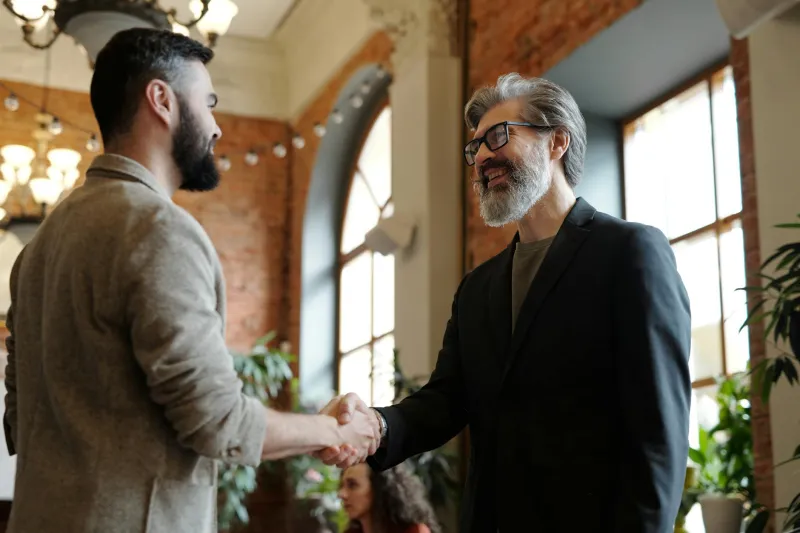
But in our rush to digitize and standardize everything, we may have algorithmed away something essential about how business gets done in America. The handshake deal backed by personal reputation built countless American fortunes and employed millions of people. Today's entrepreneurs, armed with business degrees and detailed financial models, often struggle to get funding that their grandfathers would have secured with a firm grip and a good reputation.
The most successful businesses have always been built on more than spreadsheets – they're built on the human ability to see opportunity, assess character, and take calculated risks on people with good ideas and strong work ethics. That's something no algorithm has yet learned to measure, and something America's small business community is still trying to figure out how to replace.