
The Golden Age of the High School Graduate
In 1965, Jerry Kowalski graduated from high school in Detroit and walked straight into a job at the Ford River Rouge plant. No college applications, no student loans, no career counseling sessions about "finding his passion." Just a high school diploma, a strong back, and the promise of steady work that could support a family.
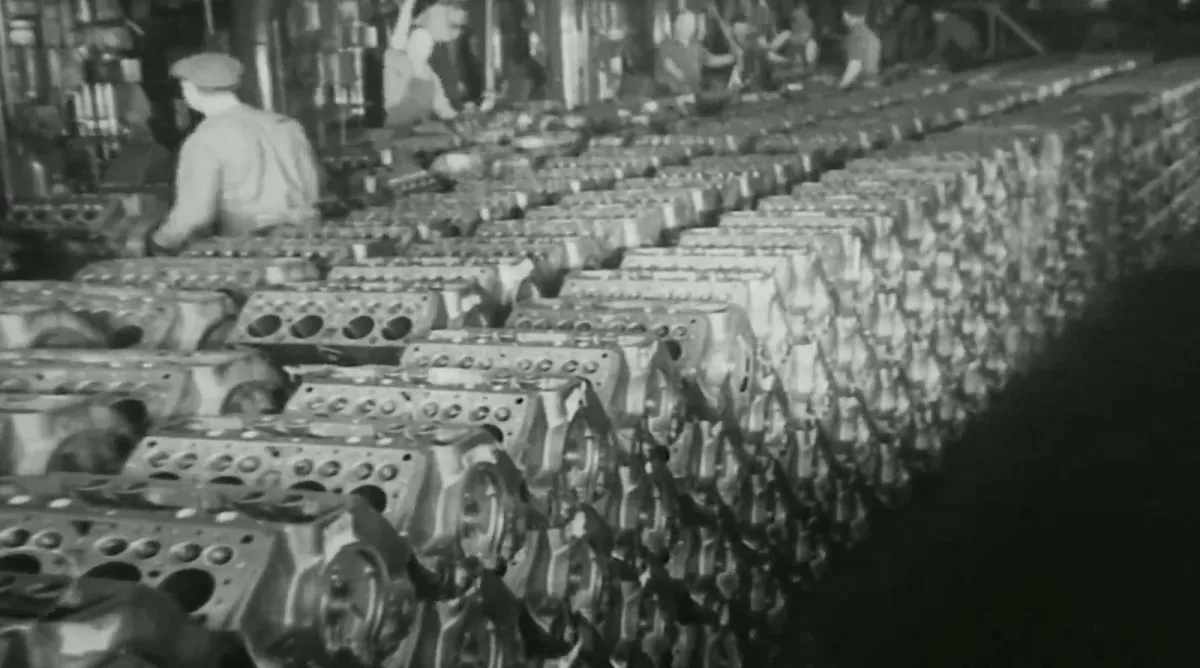 Photo: Ford River Rouge plant, via silodrome.com
Within five years, Jerry had bought a three-bedroom house in Dearborn, married his high school sweetheart, and started a family. His wages at Ford were enough to make car payments, take annual vacations to Lake Michigan, and save for his children's education. He retired at 62 with a full pension and comprehensive healthcare.
 Photo: Lake Michigan, via i.pinimg.com
Jerry's story wasn't exceptional — it was the American norm for generations of high school graduates who found economic security in manufacturing, skilled trades, and union jobs that required dedication and competence, but not a college degree.
The Economic Architecture of Non-College Prosperity
The mid-20th century American economy was built around jobs that paid middle-class wages to high school graduates. Manufacturing dominated employment, offering not just jobs but career ladders. A young worker could start on the assembly line and advance to supervisory roles, quality control, or skilled maintenance positions through on-the-job training and company-sponsored education.
These weren't just "jobs" — they were careers with built-in progression, comprehensive benefits, and retirement security. The autoworker, steelworker, or machinist enjoyed economic status comparable to college graduates, often with better job security and more predictable advancement.
Unions played a crucial role in this system, negotiating wages that rose with company profits and ensuring that productivity gains benefited workers, not just shareholders. A high school graduate in 1970 could reasonably expect their standard of living to improve throughout their career, regardless of additional education.
The Health Benefits of Economic Security
This economic stability created profound health advantages that extended far beyond paychecks. Steady employment with comprehensive benefits meant preventive healthcare was routine, not rationed. Mental health flourished in communities where hard work reliably led to prosperity.
The stress patterns of working-class life were different then. Physical work was demanding, but economic anxiety was minimal for employed workers. Job security meant families could plan for the future, invest in homeownership, and build generational wealth through property appreciation and pension accumulation.
Community health thrived when neighborhood economies were stable. Local businesses supported by well-paid factory workers created dense networks of economic interdependence. The barber, grocer, and mechanic all prospered when the local plant was running at full capacity, creating virtuous cycles of community prosperity.
The Great Unraveling
The transformation began in the 1970s and accelerated through the following decades. Manufacturing jobs moved overseas, automation eliminated others, and the remaining positions increasingly required technical certification or college degrees. What had been apprenticeship-based learning became credentialized education.
Simultaneously, service sector jobs expanded, but most paid significantly less than the manufacturing positions they replaced. A retail worker or food service employee in 2024 earns roughly the same hourly wage as their counterpart in 1980, while housing, healthcare, and education costs have skyrocketed.
The few well-paying jobs available to high school graduates — skilled trades, transportation, some technical positions — became increasingly competitive and often required additional certification, training, or geographic mobility that previous generations didn't face.
The Credentialization of Everything
Perhaps more damaging than job losses was the systematic credentialization of positions that previously required only competence and experience. Administrative assistants who once learned on the job now need associate degrees. Sales positions that once promoted successful performers now require bachelor's degrees for entry-level roles.
This "degree inflation" effectively locked high school graduates out of career tracks that their parents and grandparents had accessed easily. Even when the actual job requirements hadn't changed, HR departments used college degrees as screening mechanisms, assuming they indicated intelligence, reliability, or cultural fit.
The result was a massive transfer of opportunity from the working class to college graduates, even for positions where higher education provided no practical advantage.
The Health Consequences of Economic Insecurity
The disappearance of middle-class opportunities for high school graduates created a public health crisis that's still unfolding. Communities that once enjoyed economic stability now struggle with what researchers call "deaths of despair" — suicide, drug overdose, and alcohol-related mortality that have reduced life expectancy for working-class white Americans.
Chronic economic stress produces measurable physiological changes: elevated cortisol levels, compromised immune function, and increased cardiovascular disease risk. When steady employment disappears, so does access to employer-sponsored healthcare, creating a double burden of increased health risks and reduced medical care.
Mental health particularly suffers when economic mobility becomes impossible. The psychological benefits of meaningful work — purpose, identity, social connection — disappear when available jobs offer neither advancement opportunities nor living wages. Depression and anxiety rates in working-class communities have increased dramatically as economic prospects have declined.
The Intergenerational Transmission of Disadvantage
Perhaps most troubling, the elimination of non-college pathways to prosperity has created intergenerational poverty traps. Parents who can't afford college for their children watch them inherit economic disadvantages that previous generations could overcome through hard work alone.
This represents a fundamental break with American social mobility patterns. For most of the 20th century, each generation could reasonably expect to live better than their parents, regardless of educational attainment. That expectation no longer holds for families without college degrees.
The stress of this economic reality affects family health in multiple ways: parents working multiple jobs to make ends meet, children growing up with financial anxiety, families delaying medical care due to cost concerns, and communities losing the social capital that comes from economic stability.
What We Lost Beyond Paychecks
The disappearance of middle-class opportunities for high school graduates eliminated more than jobs — it destroyed entire ways of life that supported community health and social cohesion. The neighborhood tavern where factory workers gathered after shift, the bowling leagues and softball teams sponsored by local plants, the community festivals funded by union dues — all vanished along with the economic foundation that sustained them.
These weren't just recreational activities; they were health-promoting social networks that provided emotional support, community identity, and collective efficacy. Research consistently shows that social connection is as important for health outcomes as diet and exercise, yet economic disruption systematically destroyed the institutions that created these connections.
The Road Back
Some communities are experimenting with new approaches: apprenticeship programs that combine work and learning, community colleges partnering with local employers to create direct pathways to good jobs, and unions organizing in sectors that can't be outsourced.
But these efforts face the fundamental challenge that the economic structure supporting middle-class prosperity for high school graduates has been dismantled, not just disrupted. Rebuilding requires more than job training — it demands a renewed commitment to creating pathways to prosperity that don't require four-year degrees.
The health and wellbeing of working-class Americans depends on restoring the promise that hard work and competence, regardless of educational credentials, can lead to economic security and community prosperity. Without that restoration, we'll continue to see the health consequences of an economy that has abandoned its most fundamental promise: that in America, anyone willing to work hard can build a good life.