The Paramount Theater in downtown Springfield had 1,200 red velvet seats, a Wurlitzer organ that rose from the floor during intermissions, and a ceiling painted to look like a starry night sky. On Saturday evenings in 1955, nearly every one of those seats was filled with families who had made moviegoing their weekly ritual, as predictable and cherished as Sunday church or Friday night football.
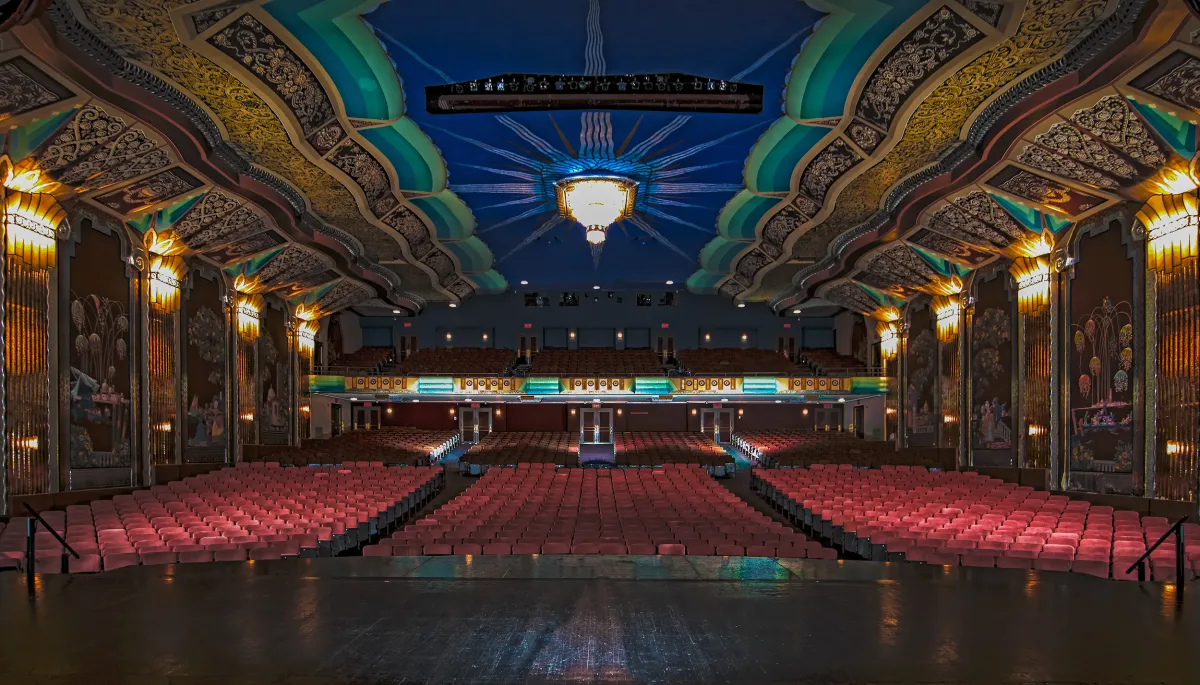 Photo: Paramount Theater, via paramountaurora.com
Today, the Paramount is a furniture store. The marquee still hangs over Main Street, but instead of announcing "James Dean in Rebel Without a Cause," it advertises "Sofas – 50% Off." The transformation tells a larger story about how America lost something irreplaceable when Hollywood killed the very theaters that made it famous.
When Movies Were Events
In mid-20th century America, going to the movies wasn't just entertainment – it was a social institution. Every town with more than a few thousand residents had at least one movie theater, and most had several. These weren't the utilitarian boxes we know today, but genuine palaces designed to transport audiences into another world before the film even started.
The downtown movie theater was where young couples went on first dates, where families spent Saturday afternoons together, and where entire communities shared the same cultural experiences. Mrs. Henderson, who sold tickets at the Rialto for thirty years, knew three generations of the same families. She knew who liked to sit in the back row, who always bought Junior Mints, and which kids needed to be separated to prevent trouble.
Tickets cost between 25 and 50 cents for adults, maybe a dime for children. A family of four could spend an entire evening at the movies – including popcorn and sodas – for less than what a single ticket costs today. The math was simple: entertainment was affordable, and theaters needed to fill seats every night to survive.
The Architecture of Dreams
Walk into any surviving neighborhood theater from this era, and you'll understand immediately what we've lost. These buildings were designed to inspire awe. Soaring ceilings, elaborate plasterwork, crystal chandeliers, and carpeted lobbies that made every moviegoer feel like royalty, at least for a few hours.
The Fox Theater in Atlanta, the Castro in San Francisco, the Orpheum in Minneapolis – these weren't just places to watch movies, they were destinations in themselves. Architects competed to create the most spectacular interiors, borrowing from European opera houses and exotic palaces to give small-town America a taste of grandeur.
 Photo: Fox Theater, via www.rateyourseats.com
The experience began the moment you approached the theater. Elaborate marquees stretched across sidewalks, blazing with hundreds of light bulbs that could be seen for blocks. Hand-painted movie posters filled display cases, and uniformed ushers guided patrons to their seats with flashlights. The ritual of moviegoing was as carefully choreographed as the films themselves.
When Hollywood Belonged to Everyone
Perhaps most importantly, these theaters created shared cultural experiences that bound communities together. When "The Wizard of Oz" premiered at the downtown theater, virtually everyone in town saw it within the first few weeks. Children and adults, rich and poor, all witnessed Dorothy's journey at the same time, in the same place.
This shared viewing created common references that lasted for generations. Everyone knew what you meant when you mentioned "Frankly, my dear, I don't give a damn" or "Here's looking at you, kid." Movies weren't just entertainment – they were the stories that defined American culture, experienced collectively rather than in isolation.
Theater owners understood their role as cultural gatekeepers. They carefully selected films that would appeal to their specific communities, often negotiating with distributors to get the movies their audiences wanted most. The relationship between theater and community was reciprocal – the theater reflected local values, and locals supported their theater with loyal attendance.
The Beginning of the End
Several forces conspired to kill America's neighborhood theaters. The rise of suburban shopping malls in the 1960s and 1970s drew businesses away from downtown areas. Television offered free entertainment at home, reducing the frequency of moviegoing. And Hollywood itself began changing how it distributed films, favoring larger theaters in suburban multiplexes over smaller downtown venues.
The multiplex revolution of the 1980s delivered the final blow. These new theaters, typically built in suburban shopping centers or standalone locations accessible only by car, could show multiple films simultaneously and serve larger geographic areas. They were more profitable for both theater owners and movie studios, but they lacked any connection to the communities they served.
One by one, America's neighborhood theaters closed. Some were demolished for parking lots, others converted to retail spaces or offices. The lucky ones became concert venues or community centers, but most simply disappeared, taking with them decades of community memories.
What Multiplexes Couldn't Replace
Today's movie theater experience is fundamentally different from what previous generations knew. Modern multiplexes are efficient machines for delivering entertainment, but they've lost the sense of place and community that made neighborhood theaters special.
Ticket prices have risen far faster than inflation – what once cost a quarter now costs fifteen dollars or more. The staff turnover is constant, so there's no Mrs. Henderson who remembers your family. The architecture is utilitarian, designed for efficiency rather than wonder. And the locations, typically in suburban strip malls or shopping centers, require a car to reach and offer no connection to the surrounding community.
Perhaps most significantly, the shared cultural experience has fragmented. With twelve or sixteen screens showing different movies, audiences self-select into smaller groups. Add streaming services, and the common cultural references that once bound communities together have largely disappeared.
The Streaming Revolution's Final Act
If multiplexes wounded America's moviegoing culture, streaming services may have delivered the killing blow. Why drive to a theater, pay for parking, buy overpriced concessions, and sit with strangers when you can watch the latest releases from your couch?
The pandemic accelerated this trend, as theaters closed and studios began releasing new films directly to streaming platforms. Many theaters that survived the multiplex era didn't survive COVID-19, and those that remain face an uncertain future in a world where entertainment is increasingly individualized and on-demand.
What We Lost When the Lights Went Out
The death of America's neighborhood theaters represents more than just a change in how we consume entertainment – it's a loss of shared community space and common cultural experience. These theaters were among the few places where people from different backgrounds regularly came together, united by their love of stories and their participation in the same community.
The elaborate architecture and careful attention to the moviegoing experience reflected a belief that ordinary people deserved beauty and grandeur in their lives, not just efficiency and convenience. The weekly ritual of going to the movies provided structure and anticipation that many families miss today.
Most importantly, these theaters created memories that lasted lifetimes. Ask anyone over sixty about their childhood movie theater, and watch their eyes light up as they describe the velvet seats, the ornate ceiling, the smell of popcorn, and the magic of watching larger-than-life stories unfold in a palace built just for dreaming.
Today's entertainment may be more convenient, more varied, and more accessible than ever before. But it's also more isolated, more expensive, and less magical. In our rush to make movies more efficient to consume, we may have forgotten what made them worth consuming in the first place.