The Reunion at Gate 23: How America's Airports Became No-Hug Zones
The Theater of Arrivals
Picture this: It's 1995, and you're walking through Chicago O'Hare. As you pass each gate, you witness dozens of mini-dramas unfolding. A grandmother clutches a bouquet, scanning faces for her granddaughter's flight from college. A businessman's wife holds up a handmade welcome sign. Kids press their noses against the windows, counting planes.
 Photo: Chicago O'Hare, via www.pmuhub.com
This wasn't just transportation infrastructure—it was America's most democratic theater, where every arrival felt like a homecoming and every departure carried the weight of genuine goodbye.
For decades, airports functioned as emotional town squares. Anyone could walk right up to any gate, armed with nothing more than curiosity and perhaps a coffee. The departure lounge was genuinely public space, where the ritual of travel included the people who loved you most.
When Security Meant a Metal Detector
Pre-2001 airport security existed, but it felt more like a polite formality. A single metal detector, maybe a bag check if you looked suspicious. The real barriers weren't physical—they were social. Families arrived early not because of security lines, but because watching planes take off and land was entertainment.
Children grew up understanding that airports were places where important moments happened. First dates ended with walks to the gate. Business trips began with spousal send-offs that lasted until boarding. Military families said their hellos and goodbyes in full view of strangers who understood the weight of those moments.
The gate area buzzed with anticipation. You could spot the nervous parents meeting their child's new boyfriend, the excited kids waiting for visiting cousins, the relief on faces when delayed flights finally arrived. Every gate told a dozen stories simultaneously.
The Economics of Emotional Infrastructure
What most people don't realize is how this system shaped spending patterns around travel. Restaurants and shops inside airports were designed for lingering. Families would arrive two hours early and make an event of it—dinner at the airport restaurant, gift shopping, maybe even impromptu celebrations when flights were delayed.
This created a different relationship with travel costs. The "airport experience" was part of the value proposition. Airlines marketed not just the flight, but the entire journey, including those precious moments of connection that happened before and after.
Compare that to today's curbside economics: quick dropoffs, expensive parking for brief pickups, and the constant pressure to keep moving. The emotional labor of travel has been outsourced to text messages and phone calls.
The Unintended Consequences of Safety
Nobody argues against the security measures implemented after September 11th. The changes were necessary, urgent, and probably overdue. But in focusing on the big picture—preventing terrorism—we rarely discuss what else disappeared.
 Photo: September 11th, via www.zvireplus.cz
The ritual of accompaniment vanished overnight. Suddenly, "I'll walk you to your gate" became "I'll drop you at security." The shared experience of waiting became a solitary one. The theater of arrival moved from inside the terminal to the chaotic pickup zone outside.
This shift had ripple effects nobody anticipated. Dating changed—no more romantic airport goodbyes. Business relationships lost a touch point. Elderly travelers lost their support networks. The simple act of flying became more isolating, more transactional.
What We Gained and Lost
Modern airports are undeniably more efficient. Security lines, despite complaints, move millions of people safely every day. Digital boarding passes, mobile notifications, and ride-sharing apps have streamlined the entire process. You can literally travel without speaking to a single human being.
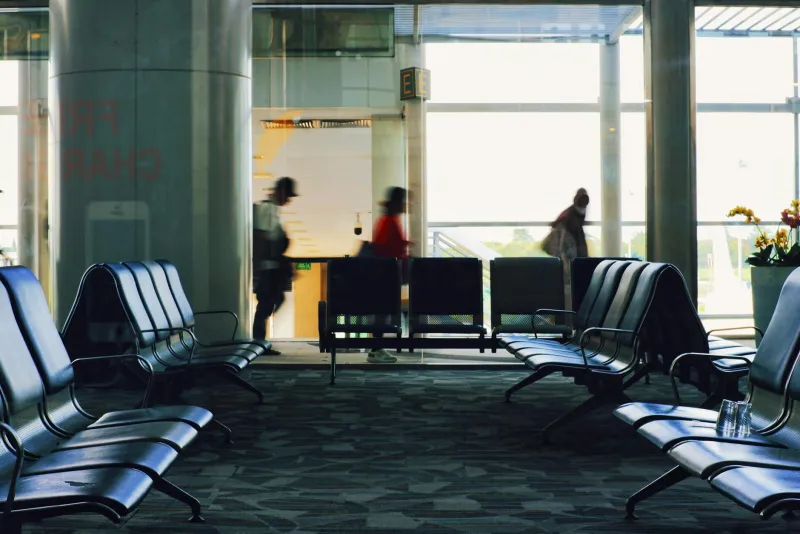
But efficiency isn't the same as experience. Today's airports feel more like processing centers than gathering places. The gate area has become a waiting room rather than a destination. The emotional architecture of travel has been reduced to the moment when you finally see someone emerge from the secure area.
The Pickup Zone Blues
Visit any airport today and witness the modern version of the reunion ritual: the chaotic dance of the pickup zone. Cars circle endlessly. Travelers stand with phones pressed to their ears, trying to coordinate with drivers who can't find them. Security guards blow whistles. Everyone is stressed.
What used to be a leisurely, anticipated moment—the gradual approach down the jetway, the scanning of waiting faces, the running embrace—has been compressed into a frantic sprint to a car that may or may not be in the right place.
The economics have shifted too. Instead of buying dinner and flowers inside the terminal, families now pay for parking or endure the free-but-stressful pickup zone experience. The airport's role in our emotional lives has been reduced to a brief, often unpleasant transition.
The Memory Palace of Connection
For anyone who experienced pre-9/11 air travel, airports hold a different kind of nostalgia. They remember when flying felt special not just because of the destination, but because of who showed up to send you off or welcome you home.
That infrastructure of care—the ability to physically accompany someone to their moment of departure—created a different relationship with distance and separation. Goodbyes had weight because they were witnessed. Arrivals felt celebratory because they were shared.
Today's travelers have adapted, of course. We've learned to say goodbye at security checkpoints and hello in pickup zones. But something fundamental about the ritual of travel was lost when we moved those moments outside the terminal walls.
The airport gate was America's most democratic space for big emotions. Rich or poor, young or old, everyone got the same access to those moments of connection. When security requirements moved that experience outside, we didn't just change how we travel—we changed how we say goodbye.