The Choreography of Community Commerce
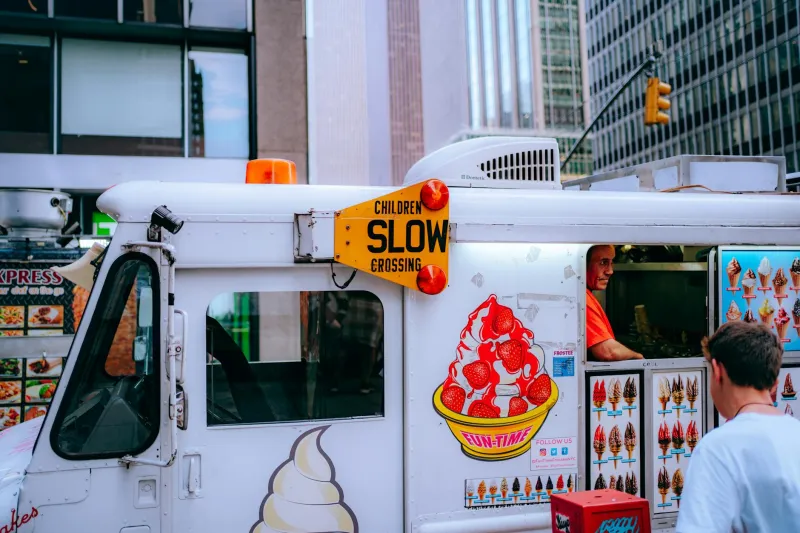
Every weekday at 3:15 PM, Mrs. Patterson would position herself on her front porch with exact change. Not because she was expecting a delivery, but because she knew that at exactly 3:17, Tony's ice cream truck would round the corner of Maple Street, playing that familiar tinkling melody that sent children racing from backyards across three blocks.
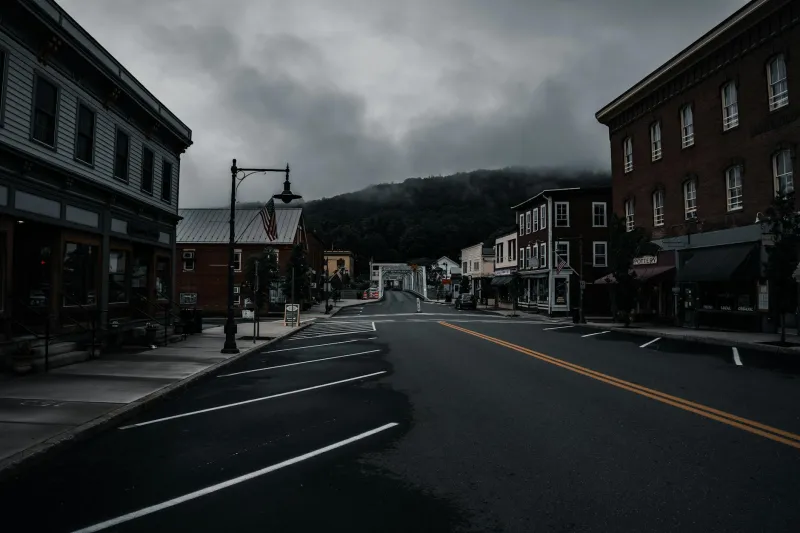
 Photo: Maple Street, via images.squarespace-cdn.com
This wasn't coincidence—it was choreography. America's neighborhoods once operated on the precise schedules of traveling merchants who knew their routes better than mail carriers knew their beats. These mobile vendors weren't just selling products; they were the moving parts that kept communities connected, informed, and supplied with everything from fresh vegetables to sharpened knives.
When Your Street Had Its Own Shopping Schedule
The mobile merchant ecosystem of mid-20th century America was remarkably sophisticated. Ice cream trucks followed elementary school schedules, arriving just as kids got home. Produce vendors hit residential streets on Tuesday and Friday mornings when housewives were planning meals. The knife sharpener came monthly, announced by his distinctive bell that could be heard four blocks away.
These vendors operated on trust and routine. Customers knew exactly when to expect them and planned their weeks accordingly. Mrs. Chen saved her dull kitchen knives for the monthly sharpening visit. The Johnsons timed their grocery shopping around the produce truck's Thursday arrival, knowing they'd get fresher vegetables than the supermarket offered.
Each vendor developed intimate knowledge of their territory. They knew which houses had new babies (and might need the ice cream truck to skip the loud music), which families were struggling financially (and might appreciate payment plans), and which customers were always good for a conversation along with their purchase.
The Economics of Rolling Relationships
These mobile businesses operated on completely different economic principles than today's commerce. Instead of maximizing transactions per hour, vendors built long-term relationships that guaranteed steady income. The ice cream man knew exactly how many Popsicles each street would buy on a hot Tuesday. The produce vendor understood seasonal preferences and adjusted inventory accordingly.
Credit was personal and immediate. If a customer was short on cash, vendors would often accept payment next week because they'd be back on the same schedule. This informal credit system worked because of the ongoing relationship—skip out on the ice cream man, and your kids would remind you of your debt every afternoon at 3:17.
The overhead was minimal but the expertise was enormous. Vendors needed to understand weather patterns (ice cream sales doubled on days above 80 degrees), local events (school holidays meant different routes), and even family dynamics (the Smiths always bought extra when grandparents visited).
The Information Highway Before the Internet
Mobile vendors served as neighborhood news networks long before social media existed. The produce vendor knew which families were expecting babies, who was looking for work, and which houses were going up for sale before the signs appeared. This informal communication network helped communities stay connected in ways that today's digital neighborhoods struggle to replicate.
Vendors often served as informal matchmakers, introducing customers who shared interests. They'd mention that Mrs. Rodriguez was looking for someone to share rides to church, or that the new family on Oak Street had kids the same age as the Thompsons. These casual connections built the social fabric that made neighborhoods feel like communities rather than collections of individual houses.
 Photo: Oak Street, via avccxlqtlq.cloudimg.io
What Killed the Mobile Marketplace
The decline of neighborhood vendors wasn't sudden—it was death by a thousand cuts. Suburban sprawl created routes too long and scattered to be profitable. Zoning laws increasingly restricted street vending, often at the urging of established businesses who saw mobile vendors as unfair competition.
Safety regulations, while well-intentioned, made small-scale vending prohibitively expensive. The same health department requirements that applied to restaurants were imposed on ice cream trucks, driving many operators out of business. Insurance costs skyrocketed as liability concerns grew.
Most importantly, consumer habits changed. The rise of suburban shopping centers and later big-box stores offered convenience and selection that mobile vendors couldn't match. Why wait for the produce truck when you could drive to a supermarket with 15 varieties of apples available 24/7?
The Gig Economy's Hollow Echo
Today's food trucks and delivery drivers might seem like the modern evolution of mobile vendors, but they operate in fundamentally different ways. Modern mobile commerce is app-driven and anonymous. Food truck locations change daily based on algorithms rather than community relationships. Delivery drivers rarely interact with customers beyond a doorstep handoff.
The predictability that defined the old system has been replaced by on-demand convenience. Instead of knowing the ice cream truck's schedule, we order DoorDash when we want ice cream. Instead of building relationships with vendors, we rate drivers on apps we'll never use again.
The Rhythm Section of American Life
What made the old mobile vendor system remarkable wasn't just the convenience—it was the rhythm it provided to daily life. Communities had temporal landmarks: the morning milk delivery, the afternoon ice cream truck, the weekly knife sharpener. These regular beats gave structure to neighborhood life in ways that random deliveries simply can't replicate.
Children learned about commerce, responsibility, and community through these interactions. They saved allowances for ice cream, learned to make change, and understood that the vendors were neighbors too—people with names, families, and stories worth knowing.
When Convenience Had a Human Face
The mobile vendors of America's past created something that today's ultra-convenient delivery economy struggles to match: commerce with community connection. They turned necessary transactions into social interactions, and shopping into a neighborhood event.
Modern consumers enjoy unprecedented convenience—anything can be delivered anywhere within hours. But in gaining that efficiency, we lost the vendors who knew our names, the schedules that structured our days, and the mobile marketplace that made every street feel like a small town square.
The ice cream truck's melody might still echo through some neighborhoods, but it's playing to a different world—one where convenience comes at the cost of community, and where the remarkable rhythm of mobile merchants has been replaced by the silent efficiency of apps and algorithms.