Your Neighborhood Druggist Knew Your Medical History by Heart: The Lost Art of Personal Pharmacy Care
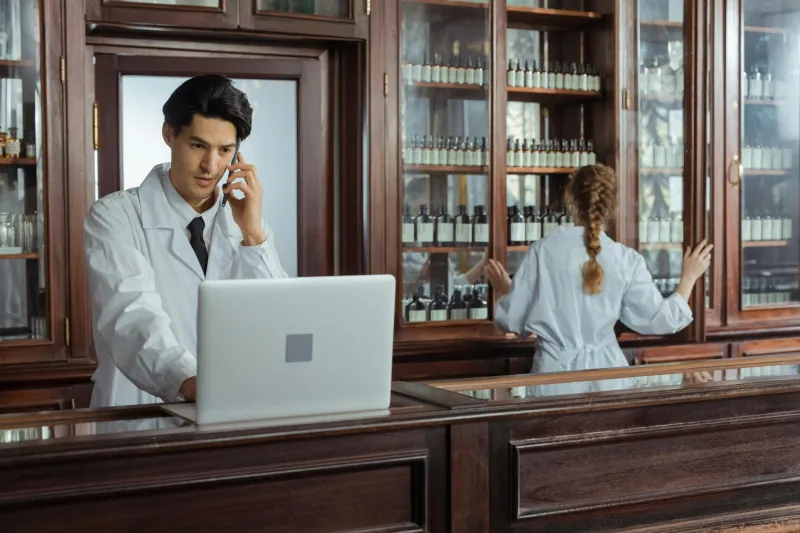
When Your Pharmacist Was Part of the Family
Step into any American pharmacy today, and you'll likely encounter a drive-through window, automated prescription bottles tumbling down conveyor belts, and a harried pharmacist you've never met trying to fill 300 prescriptions before lunch. But rewind to 1960, and the scene was remarkably different.
Back then, walking into Murphy's Drug Store meant being greeted by name. The pharmacist behind the counter—often the owner—knew that Mrs. Henderson's arthritis flared up in winter, that young Tommy was allergic to penicillin, and that Mr. Garcia preferred his blood pressure medication in the morning because it helped him sleep better.
This wasn't just small-town charm. It was healthcare.
The Corner Drugstore as Medical Hub
The neighborhood pharmacy served as an unofficial medical consultation center. Pharmacists spent considerable time talking with customers, explaining medications, discussing side effects, and even suggesting over-the-counter alternatives. They maintained handwritten records of every customer's prescription history and often caught dangerous drug interactions that busy doctors might miss.
"My grandfather would spend twenty minutes with each customer," recalls Sarah Chen, whose family ran Chen's Pharmacy in San Francisco's Richmond District for forty years. "He knew everyone's medical story. People trusted him with questions they wouldn't even ask their doctors."
These pharmacists compounded many medications on-site, mixing custom formulations for individual patients. They'd adjust strengths, change flavors for children, or create topical creams that weren't available commercially. The pharmacy was part medical office, part chemistry lab, and part community gathering place.
The Corporate Takeover
The transformation began in the 1970s as chain pharmacies recognized the profit potential in prescription drugs. CVS opened its first store in 1963, but the real shift happened when these chains began acquiring independent pharmacies en masse during the 1980s and 1990s.
The business model was seductive: centralized operations, bulk purchasing power, and streamlined efficiency. Prescription processing times dropped from twenty minutes to five. Drive-through windows eliminated the need to park and walk inside. Automated systems reduced human error.
But something crucial was lost in translation.
The Efficiency Trade-Off
Today's pharmacy experience prioritizes speed over relationship. The average chain pharmacist fills between 200-400 prescriptions per day—roughly double what their 1980s counterparts handled. Face-to-face consultation time has shrunk to under two minutes per customer, often conducted through a small window while other customers wait in line.
Modern pharmacy software tracks drug interactions and allergies, but it can't replicate the intuitive knowledge that came from years of personal relationships. When your pharmacist knew you'd been struggling with medication compliance, they'd call to check in. When they noticed you hadn't refilled a critical prescription, they'd reach out proactively.
"The computer knows what medications you're taking," explains Dr. Michael Rodriguez, who owns one of the few remaining independent pharmacies in Austin, Texas. "But it doesn't know that you're caring for your elderly mother, working two jobs, and barely sleeping. That context matters enormously for medication effectiveness."
What the Numbers Tell Us
The statistics reveal the scope of this transformation. In 1990, independent pharmacies filled about 60% of American prescriptions. Today, that figure has plummeted to less than 35%. Meanwhile, the top three pharmacy chains—CVS, Walgreens, and Rite Aid—control more than 60% of the market.
Prescription volume has exploded alongside this consolidation. Americans filled 4.2 billion prescriptions in 2020, compared to 2.8 billion in 2000. The average American now takes four prescription medications regularly, up from two in 1990.
The Human Cost of Automation
This shift toward volume and efficiency has real consequences for patient care. Medication errors, while still relatively rare, have increased as pharmacists handle larger caseloads with less personal oversight. More concerning, medication non-adherence—patients not taking prescriptions as directed—affects nearly 50% of Americans, contributing to an estimated 125,000 deaths annually.
The personal relationship between pharmacist and patient served as a crucial safeguard against these problems. When your pharmacist knew your routine, your concerns, and your family situation, they could provide guidance that went far beyond simply counting pills.
The Quiet Comeback
Interestingly, some independent pharmacies are staging a quiet renaissance by returning to this personalized model. These modern independents offer services that chain pharmacies can't match: comprehensive medication reviews, custom compounding, home delivery with personal consultation, and specialized care for complex conditions.
"We're seeing patients who are tired of being treated like prescription numbers," says Chen, who recently opened a new independent pharmacy after her family's original store was sold to a chain. "They want someone who knows their story and can help them navigate their medications as a trusted advisor, not just a dispenser."
Some of these new-generation independent pharmacies are thriving by combining old-school personal service with modern conveniences like electronic records and insurance processing. They're proving that efficiency and relationship don't have to be mutually exclusive.
What We Lost, What We Gained
The evolution of American pharmacy represents a classic trade-off between personal service and systemic efficiency. We gained convenience, lower costs, and reduced wait times. We lost the trusted advisor who knew our medical stories and could provide guidance beyond what any computer system offers.
For millions of Americans managing complex medication regimens—particularly older adults taking multiple prescriptions—this shift from relationship to transaction has real health consequences. The neighborhood pharmacist who knew your name wasn't just being friendly; they were providing a crucial layer of personalized healthcare that's increasingly difficult to find.
As healthcare becomes more complex and impersonal, perhaps it's time to ask whether we gave up too much in our pursuit of pharmaceutical efficiency.