When Doctors Came to Your Home: The Unexpected Return of Medicine to the Patient
The Doctor on the Doorstep
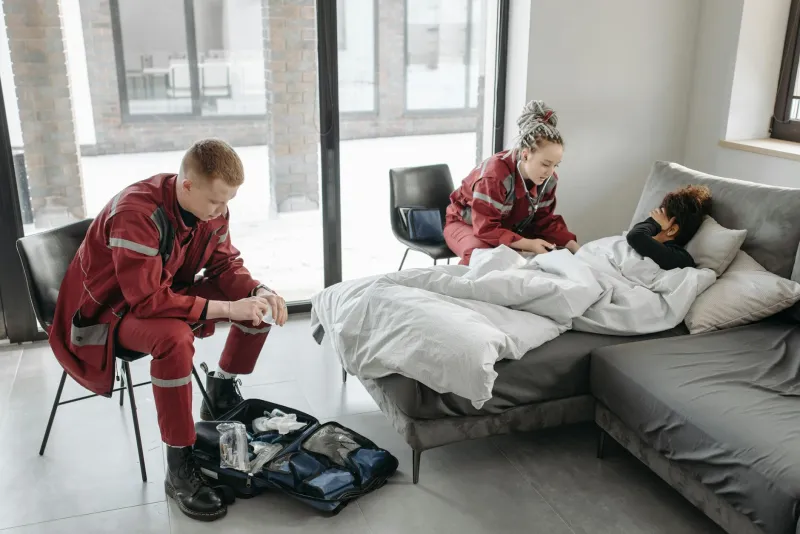
Imagine it's 1945, and your child wakes up with a high fever. You call your doctor. Within a few hours, Dr. Morrison arrives at your house with his leather bag, examines your child in the bedroom, provides treatment, and leaves instructions for care. You don't travel anywhere. You don't wait in a reception area. You don't fill out forms. Medicine comes to you.
This wasn't unusual. This was normal. House calls were the backbone of American medical practice through the mid-20th century. Physicians maintained small practices and knew their patients personally. They understood family medical histories, home conditions, and social circumstances. A doctor might visit a patient's home multiple times for an acute illness, then follow up weeks later to ensure recovery. The relationship was ongoing and embedded in the community.
By 1960, approximately 40% of physician visits in America occurred in patients' homes. In some rural areas, the figure was much higher. The practice was so standard that medical schools trained students in home visit protocols. The assumption was that medicine happened where patients lived.
Then, gradually, everything reversed. By 1980, house calls had fallen to less than 1% of physician visits. By 2000, they were nearly extinct—a quaint relic discussed in medical history courses. What happened wasn't a sudden revelation that house calls were inferior. Instead, several converging forces—economic incentives, technological change, and cultural shifts—pulled medicine away from homes and into centralized buildings.
Why Medicine Left Home
The Economics of Efficiency
The first force was economic. A doctor who travels between homes sees fewer patients per day than one who stays in a clinic. In a clinic, patients come to the doctor. The doctor maximizes patient volume, and therefore revenue. As healthcare increasingly operated under economic pressure—insurance reimbursements, efficiency metrics, profit margins—the incentive structure shifted decisively against house calls.
Medicare, introduced in 1965, reimbursed house calls at lower rates than office visits. Private insurance followed. The message was clear: visits conducted in a clinic setting were more valuable to the system than visits in homes. Physicians, rational economic actors, adjusted their practices accordingly.
Technology That Required a Building
The second force was technological. As medicine advanced through the mid-20th century, it increasingly relied on equipment—X-ray machines, EKGs, laboratory analysis, imaging devices. These couldn't fit in a leather bag. They required a building, a staff, and infrastructure. A patient with a suspected heart problem needed an EKG. A child with possible pneumonia needed a chest X-ray. The technology was in clinics and hospitals, not in homes.
For a time, this seemed like an obvious improvement. Medicine became more sophisticated, more diagnostic, more effective. The trade-off—loss of accessibility and personal connection—seemed like a minor cost for technological advancement.
The Culture of Specialization
The third force was cultural. As medicine professionalized and specialized, the general practitioner—the doctor who made house calls and knew entire families—became less prestigious. Medical training increasingly emphasized specialization and technical expertise over relationship-building. The family doctor seemed quaint compared to the cardiologist or the oncologist. The clinic felt more professional than the home.
What Was Lost
The shift to clinic-based medicine brought genuine advantages: access to diagnostics, coordination with specialists, standardized protocols. But it also created problems that are only now becoming visible.
First, it made healthcare less accessible, not more. A patient with limited mobility, transportation challenges, or childcare constraints faced barriers to clinic visits that hadn't existed with house calls. Elderly patients, disabled patients, and those in rural areas found healthcare increasingly difficult to access despite living in a wealthier, more technologically advanced society.
Second, it fragmented care. A house call doctor knew a patient's home, diet, stress level, social situation, and family dynamics. This information informed diagnosis and treatment. A clinic visit captures a snapshot—blood pressure taken in a sterile room, symptoms reported in 15 minutes. The human context disappeared.
Third, it concentrated power and profit. Healthcare became an industry with gatekeepers, waiting rooms, and administrative overhead. Patients became consumers navigating a complex system rather than individuals in relationship with a known physician.
The Unexpected Return
What's remarkable is that technology—the same force that killed house calls—is now resurrecting them in a new form.
Telemedicine, accelerated by the COVID-19 pandemic, has fundamentally shifted how medicine is delivered. Today, millions of Americans receive medical care via video call from their homes. A patient sits in their bedroom, living room, or kitchen and consults with a doctor on a screen. The doctor can see the patient's environment, hear family members in the background, and understand context.
For certain conditions, telemedicine is demonstrably superior to in-clinic care. A patient with a urinary tract infection, a rash, or mild respiratory symptoms doesn't need an office visit. They need a diagnosis and prescription, both deliverable via video. The friction—travel time, waiting, transportation—is eliminated. Care is faster and cheaper.
More surprisingly, some primary care practices are experimenting with actual house visits again, using a hybrid model. A doctor or nurse practitioner visits a homebound patient, conducts an examination, and uses portable diagnostic tools or coordinates with clinics for needed tests. For elderly patients, disabled patients, and those in underserved areas, house visits are re-emerging as a solution to access problems that clinic-based medicine created.
A Cycle Complete
The trajectory is almost absurd when viewed in full: medicine left homes because technology required buildings. Now, technology has enabled medicine to return to homes. The circle closes, but with a difference. Modern telemedicine combines the accessibility of house calls with the diagnostic capability of clinics. A patient gets care at home, with access to specialist consultation, without the friction of travel and waiting.
It's a reminder that "progress" isn't always linear. The clinic-based model seemed like an obvious improvement in 1960. In 2024, we're recognizing that it solved some problems while creating others. The next generation of medicine might look, in some ways, like the medicine of 1945—delivered where patients live, embedded in their actual circumstances, responsive to their needs rather than the system's efficiency metrics.
The doctor's house call didn't disappear because it was inferior. It disappeared because the incentive structure changed. Now that technology has shifted again, and as we recognize the human costs of medical fragmentation, the house call—in its modern form—is quietly coming home.