What Happened to Heart Attack Patients in 1970 Would Shock Your Doctor Today
What Happened to Heart Attack Patients in 1970 Would Shock Your Doctor Today
Imagine you're a 52-year-old man in Cleveland, Ohio. It's 1970. You wake up in the early hours of a Tuesday morning with crushing chest pain and a cold sweat soaking through your pajamas. Your wife calls an ambulance. You arrive at the hospital.
And then, mostly, you wait.
There are no clot-busting drugs. No cardiac catheterization lab standing by. No stent ready to be threaded through your coronary artery to reopen the blockage killing your heart muscle. The doctors monitor your heart rhythm, keep you comfortable, and hope that your body stabilizes on its own. If you're lucky, you go home in two or three weeks — told to rest, avoid stress, and take it easy. If you're not lucky, you don't go home at all.
This wasn't negligence. It was simply the state of medicine in 1970. And understanding just how far cardiac care has traveled since then is one of the most remarkable stories in modern American health.
The Numbers Tell a Brutal Story
In the early 1970s, the in-hospital mortality rate for a heart attack — what doctors call an acute myocardial infarction — was somewhere between 30 and 40 percent. Roughly one in three people who made it to a hospital didn't make it home. And many more never made it to a hospital at all.
Today, that in-hospital mortality rate has dropped to somewhere between 5 and 6 percent for most patients, and even lower at high-volume cardiac centers. That's not a modest improvement. That's a transformation so significant that it's difficult to fully absorb.
The American Heart Association estimates that death rates from cardiovascular disease have fallen by more than 70 percent since 1970. Some of that is lifestyle and prevention. But a substantial portion is the direct result of what happens in the first hours after a heart attack begins — a window that medicine has learned to use with extraordinary precision.
What Doctors Didn't Know
Part of what makes the 1970 picture so striking is how limited the medical understanding was. The concept that a heart attack was caused by a clot suddenly blocking a coronary artery — and that dissolving or removing that clot quickly could save heart muscle — wasn't yet the clinical consensus. The full picture of plaque rupture, thrombosis, and time-dependent muscle death was still being assembled.
Without that understanding, treatment was largely supportive. Patients were admitted to coronary care units, which were themselves a relatively new innovation in the 1960s, and monitored for dangerous arrhythmias. Lidocaine was used to manage irregular rhythms. Beyond that, the toolkit was thin.
The phrase cardiologists use today is "time is muscle" — meaning every minute the artery stays blocked, more heart tissue dies permanently. In 1970, that clock wasn't really on anyone's radar in a clinical sense.
The Interventions That Changed Everything
The transformation happened in waves across several decades.
Thrombolytic therapy — clot-dissolving drugs — began entering clinical use in the late 1970s and 1980s. Trials showed that giving these drugs intravenously within hours of a heart attack could dramatically improve survival. It wasn't perfect, but it was the first time medicine had a tool that actually attacked the underlying cause rather than just managing the aftermath.
Then came angioplasty. Andreas Grüntzig performed the first coronary balloon angioplasty in 1977, and the technique spread rapidly through the 1980s. The idea was almost audacious: thread a catheter through the femoral artery in the groin, navigate it up into the coronary circulation, and physically open the blocked vessel with an inflatable balloon.
Coronary stents arrived in the late 1980s and early 1990s, providing a way to keep the artery propped open after the balloon had done its work. Drug-eluting stents, which release medication to prevent re-narrowing, came next. Each iteration improved outcomes.
Today, the standard of care in most American hospitals is primary percutaneous coronary intervention — commonly called primary PCI. The goal is to open the blocked artery within 90 minutes of a patient arriving at a PCI-capable hospital. That 90-minute benchmark, known as the door-to-balloon time, is tracked obsessively by hospitals because the data is unambiguous: faster treatment means more surviving heart muscle means better long-term outcomes.
What It Feels Like Now vs. Then
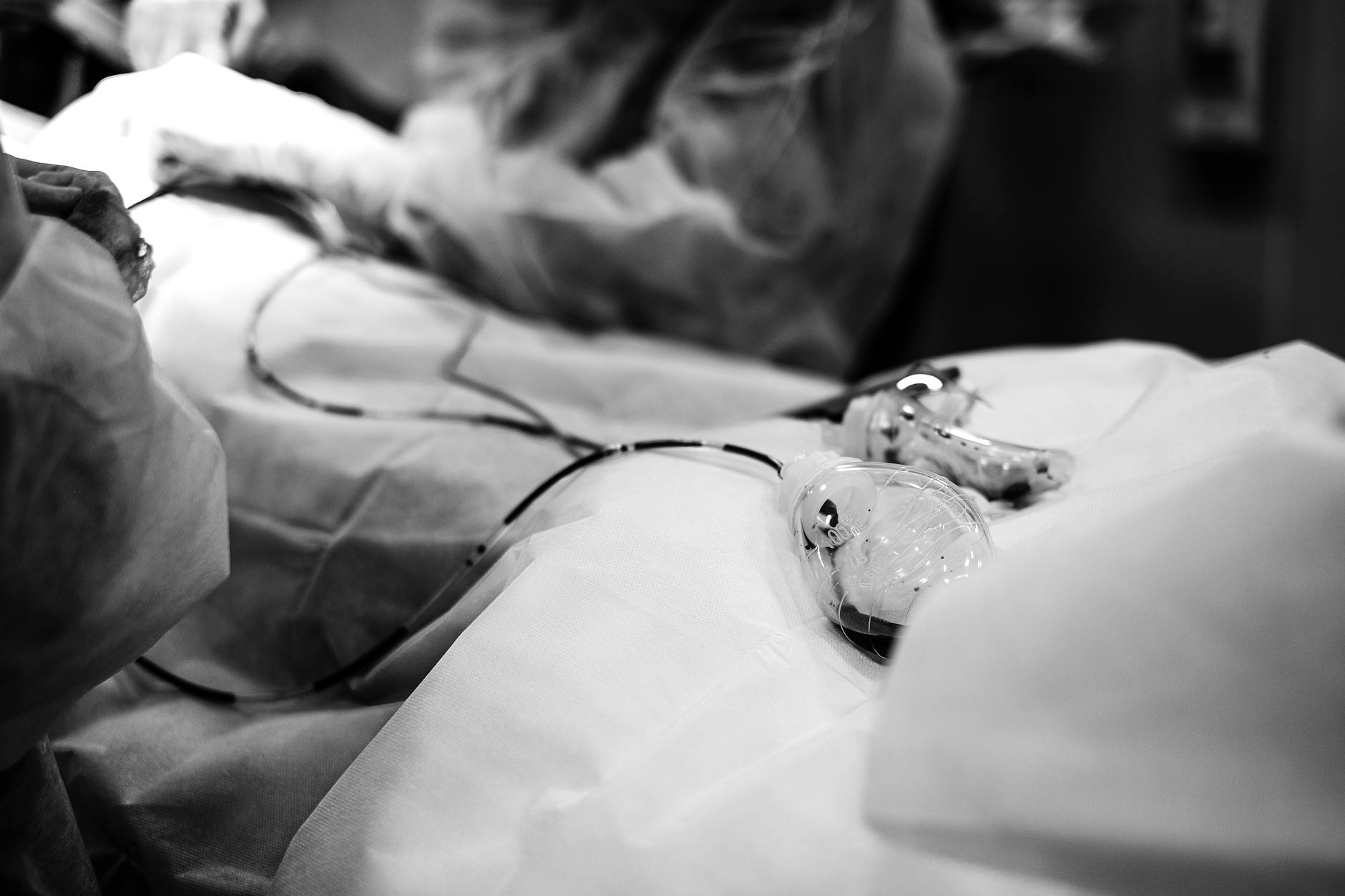
For a patient today, the experience is radically different from 1970 in ways both technical and human. You arrive at the ER with chest pain, and within minutes an EKG is being read — often transmitted digitally to a cardiologist before you've even been fully assessed. If the pattern shows a STEMI (a major blockage), a cascade of activity begins almost immediately. The cath lab team is paged. Blood thinners are administered. Within the hour, you may be lying on a table while a cardiologist guides a wire through your arterial system and restores blood flow to your heart.
Many patients describe being awake and alert through the entire procedure, watching a monitor as the blockage clears and the chest pain lifts almost instantly. It's a strange and extraordinary thing to witness your own heart being repaired in real time.
In 1970, that experience simply didn't exist.
A Different Kind of Miracle
We tend to think of medical miracles as singular moments — a vaccine, a surgical first, a drug that changes everything overnight. The revolution in cardiac care doesn't look like that. It looks like decades of incremental science, clinical trials, technology development, and protocol refinement, all stacking on top of each other until the cumulative effect became extraordinary.
The people alive today because of those stacked improvements number in the millions. Many of them have no idea how close the margin was — or how different the outcome would have been if they'd had their heart attack fifty years earlier.
That's not a small thing. That's one of the most quietly remarkable changes in American life.