The Last Generation to Write Real Letters
In 1985, the average American household received 22 pieces of personal mail each month. Today, that number has dropped to fewer than three. Between those statistics lies one of the most profound shifts in human communication since the invention of writing itself.
For most of American history, maintaining relationships across distance meant sitting down with pen and paper, choosing words carefully, and waiting days or weeks for a response. This wasn't just communication — it was a form of emotional discipline that shaped how people thought, felt, and connected with each other.
When Every Word Had Weight
Writing a letter in 1975 required intention. You had to find paper, locate a working pen, compose your thoughts without the safety net of backspace or delete, address an envelope, find a stamp, and make a trip to the mailbox. The entire process took time, effort, and actual money — a first-class stamp cost 10 cents, equivalent to about 50 cents today.
This friction wasn't a bug in the system; it was a feature. Because each letter represented a real investment, people wrote differently. They reflected before putting pen to paper. They organized their thoughts. They said things that mattered.
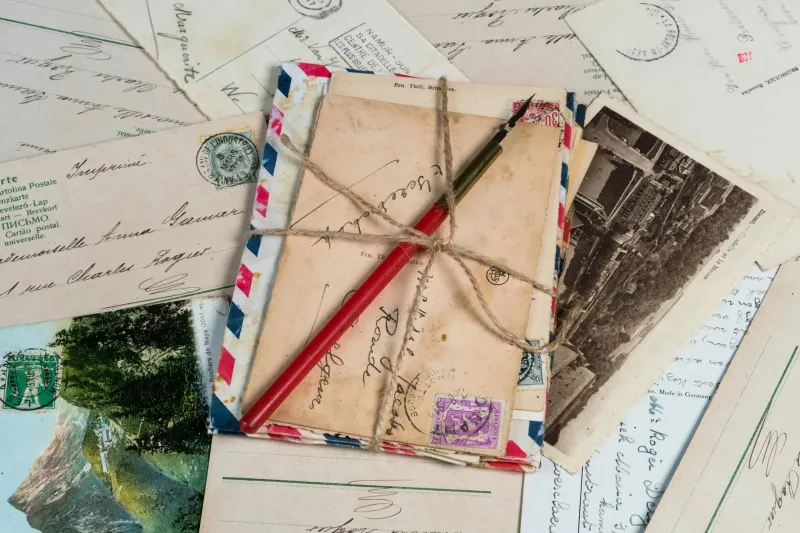
Consider the love letters that survived from previous generations — not just from famous writers, but from ordinary Americans. Soldiers writing home from Vietnam, couples separated by work or circumstances, children away at college. These weren't casual check-ins or emoji-filled updates. They were substantial, considered pieces of communication that revealed the writer's inner life in ways that modern texting rarely achieves.
The Psychology of Delayed Gratification
Waiting for a letter created a unique emotional experience that has largely vanished from American life. The anticipation of receiving mail was genuine excitement. People remembered when they last heard from specific correspondents. They treasured letters, reread them, and often kept them for years.
This delay also created space for emotional processing that instant communication eliminates. When you couldn't immediately respond to news — good or bad — you had time to absorb it, think about it, and formulate a thoughtful response. Arguments couldn't escalate in real-time. Misunderstandings had time to resolve themselves before hasty replies could make them worse.
Psychologists now recognize this forced pause as a form of emotional regulation that may have contributed to better mental health outcomes. The constant availability of instant response that defines modern communication can create anxiety and pressure that previous generations simply didn't experience.
The Death of Personal Penmanship
Handwriting wasn't just a delivery method — it was part of the message. People developed distinctive handwriting styles that became as recognizable as their voices. Receiving a letter meant encountering that person's physical presence in a way that typed text cannot replicate.
The act of writing by hand also engages different parts of the brain than typing. Research shows that handwriting activates areas associated with memory, learning, and creativity. When Americans stopped writing letters, they lost not just a communication method but a form of cognitive exercise.
Many families kept boxes of letters that served as informal archives of their relationships and history. These handwritten records captured not just what people said, but how they felt when they said it — evident in their handwriting, their choice of paper, even their mistakes and corrections.
What Instant Communication Cannot Replace
Today's communication is faster, cheaper, and more convenient than letter-writing ever was. But speed and convenience aren't the only measures of value. Modern Americans exchange more messages than ever before, yet surveys consistently show increasing levels of loneliness and social isolation.
The problem isn't just that we've lost the art of letter-writing — it's that we've lost the mindset that made letter-writing valuable. The willingness to invest time and effort in communication. The discipline of organizing thoughts before expressing them. The patience to wait for responses and the gratitude to appreciate them when they arrive.
Text messages and emails can convey information efficiently, but they struggle to convey presence, consideration, and genuine care in the way that a handwritten letter naturally did. The medium really was part of the message.
The Unexpected Return of Intentional Communication
Interestingly, some Americans are rediscovering the power of deliberate correspondence. Handwritten thank-you notes still carry more weight than emailed ones. Wedding invitations sent by mail feel more significant than digital ones. Even in business, a handwritten note can stand out in ways that electronic communication cannot.
This isn't nostalgia — it's recognition that different forms of communication serve different purposes. While instant messaging excels at coordination and quick updates, it cannot replicate the intimacy and thoughtfulness that characterized America's letter-writing era.
The Letters We'll Never Write
Perhaps the greatest loss isn't just the letters we no longer receive, but the letters we no longer write. The discipline of organizing thoughts for another person's consideration. The practice of expressing gratitude, sympathy, love, and friendship in considered words rather than quick reactions.
In gaining the ability to communicate instantly with anyone, anywhere, Americans may have lost something harder to quantify but equally valuable: the art of communication that makes the other person feel truly heard, considered, and valued. That's a remarkably changed world indeed.